Links
- CV
- Titles
- Topics
- Tickets
- Science
- About Eric
- Book Reviews
- Country Profile
- Modern China
- Contact Eric
- Podcast
- Vision
- Sekai
- John
Archives
RSS

Reflections on a Wandering Life.....
Friday, May 14, 2021
Science Night - Darwin's Methods

Click for larger image.
Watch this seven-minute video. Can you decipher Meyer’s basic thesis? What he is basically saying is that if you are going to look for a cause for something, you should look for a cause currently observable that is known to produce the kind of thing you are looking for. So what current cause is known to produce information? He quotes Henry Quastler:
The creation of new information is habitually associated with conscious activity.The essence of DNA is information:
The information density of DNA is remarkable — just one gram can store 215 petabytes, or 215 million gigabytes, of data. For context, the average hard drive in a laptop can house just one millionth of that amount. —John CumbersSo what is the cause of the massive amount of information contained in the DNA molecule? Clearly it would involve some sort of conscious activity. The idea that the bringing in of DNA would be associated with conscious activity is not only rational, it is nonsensical to assume that something with such massive information storage capacity could come about without conscious activity, as a result of a crude accident of nature.
Meyer goes as far as to say that if Darwin had applied his own methods using the information we have available to day, he would have drawn very different conclusions than the ones we all study in our science books. Not sure about that, because I don’t know if mere lack of information was the primary cause of Darwin’s conclusions. But I guess I would say that if Darwin had had access to a microscope, the conclusions he came to would have been much harder to justify, which is why they are being challenged today. And there is no way his book Origin of Species could have been published today, because the title, at least, is overtly racist. Here is the full title of Darwin's classic: Origin of Species by Natural Selection, or the Preservation of Favoured Races in the Struggle for Life

Click for larger image.
In the video below, Michael Behe explains his growing skepticism of Darwin's theory, and he outlines some of the problems with it, particularly that scientists in Darwin's day had no idea how complex the human cell is, because they had never seen it.
If I could summarize the basic thesis of the Intelligent Design folks re: Darwinian evolution, it would look like this:
Darwin’s methods + today’s information = Intelligent Design
The general idea seems to be, “Now that we have microscopes and can see how complex the human cell actually is, there is no more excuse for believing a theory as juvenile as Darwin’s theory of evolution. The complexity of the cell makes obvious the existence, at some point in the process, of a vastly intelligent mind.”
I don’t know if I have expressed it just the way they would, but I would say that, while I agree with the Intelligent Design folks that the irreducible complexity of the cell makes evident the presence of intelligence in the development of this complexity, I believe that intelligent design was more than obvious long before there were microscopes. The question I pose to Chinese young people when I am talking about this, is not “How can something as complex as the human cell have evolved without direction?” My question is “Who put the stars in the sky?” You see, even if you believe that all life evolved originally from some sort of “primordial soup,” you still have to explain where that primordial soup came from. And where did the planet on which it existed come from? So the existence of an intelligent designer is not just obvious to anyone with a microscope. It is more than obvious to anyone who has ever looked into the night sky and tried to count the stars.
“The heavens declare the glory of God; and the firmament sheweth his handywork.” (Psalm 19:1)
Labels: Evolution, Intelligent Design
Tuesday, November 26, 2019
Science Night - The Origin of Life Has Not Been Explained

Do you like chemistry? Did you get good grades in chemistry in high school and/or college? If so, you need to take twenty-three minutes of time and watch this lecture (below). It is, hands down, the best chemistry lecture you have ever heard.
When I was in college (Oregon College of Education), there was an announcement that we could test out of the chemistry portion of the science requirement for the liberal arts core. I took the test and passed. Later, a pre-med student was commenting about this. He said, "They let these guys balance a few equations and get out of chemistry." He didn't like the idea. But I didn't think it was bad. It wasn't a CLEP test. I still had to make up the hours. To substitute for a four hour chemistry class, I took a three hour class in computer coding and a one credit field trip. It was in the Wallowa mountains in northeastern Oregon. Beautiful.
I didn't do that because I didn't think chemistry was important. But I just knew that my life wasn't going to be about chemistry. So for me, it was a good plan. But this video is a reminder of the importance of chemistry. I didn't think about it before I watched this, but you know, most of the ideas about evolution are pontificated by biologists or zoologists who know little about chemistry. But chemistry comes before biology. We can't even talk about biology if the chemistry doesn't work.
This brief lecture blows modern theories of evolution to smithereens, not by refuting them biologically, but by showing that the chemistry just isn't there.
Sometimes we hear people saying something like "It's in my DNA," when they are talking about a particular habit or way of life. If you pay attention, most of the time you will notice that they are referring to something that is culturally derived not genetically derived. But DNA is not a mystical force that influences who you are. DNA is a chemical substance. It stands for deoxyribonucleic acid. Years ago, I read that if the genetic coding in DNA were published in books, it would fill three thousand volumes. DNA is extraordinarily complex. Watch this video and see what you think. If you watch it attentively, and with an open mind, there is no way you will still believe in evolution by the time you are finished.
Labels: Evolution
Wednesday, November 13, 2019
Science Night - Atheism and Its Scientific Pretensions
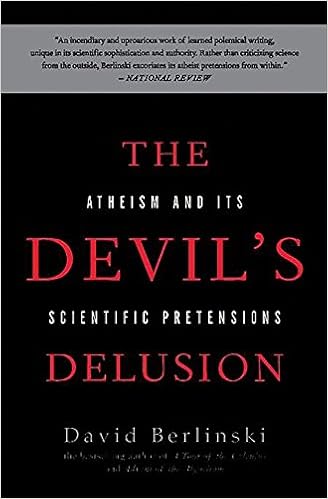
In the scientific community today, there are the "new atheists," such as Richard Dawkins, there are the Christians, such as John Lennox from Oxford and Stephen Meyer of the Discovery Institute, and there are also the agnostics, who do not number themselves among the believers, but look with disdain on the new atheists, who always seem so sure of themselves in their assertion that there is no God.
I suppose you could say that the agnostics are taking the easy way out. They don't have to commit themselves to anything. They can just attack. But it is interesting to me that the agnostics tend to get along better with Christians than with atheists. I suppose I should add that among the atheists, there are the cordial atheists and the angry atheists. I am making up these categories as I am pounding this out on my laptop in the old, old factory (since made in to a youth hostel) which is my home when I am in Shanghai. So you can debate them if you like--I won't be offended. In fact, after I have had time to think about it, I may debate them myself.
But they are not pulled out of thin air, either. I have given this matter some thought, and I have engaged with a number of thinkers down through the years. Years ago, I was chatting with a colleague of mine at the university where I was teaching in Tempe Arizona. He was talking about how he would never think of driving on the freeways in the Phoenix area. He always took the streets. He was deathly afraid of freeways.
I said to him, "No, you can't live that way. You just have to get out there and do it. You'll get used to it."
He said, "That's easy for you to say. You have God on your side. You have to remember I'm an atheist."
He was never cantankerous, like Dawkins, who is the first person to come to people's minds when they think about "new atheists" since Christopher Hitchens died. But he was not a believer, either, and he did not call himself an agnostic. So I don't believe, and do not want to imply, that all atheists are ill-tempered and angry. George Will, for example, calls himself a "low voltage" atheist.
David Berlinski is a mathematician, but he also has considerable background in philosophy, and he has written several novels. In this lecture, given in 2012 as an episode of Socrates in the City, he attacks both Darwinism and atheism. Perhaps I should have featured this video before the previous one, because this lecture predates that interview by several years. In some ways, though, that one is more important, because it shows how scientists one by one are being won over to the belief that Darwin's idea just are not scientifically viable.
So keep this in mind when you are watching this video. David Berlinski does not qualify as one of these new converts. He has been a Darwin doubter for a long time. But he is important, because he and others like him are part of the reason some of these world renowned scientists are being won over. David Gelernter specifically mentions him in telling of his own conversion. And I should emphasize that this is not a religious conversion. David Gelernter did not become a Christian. He does not even say that he has been won over to the idea of Intelligent Design. His conversion, if you want to call it that, is an acceptance of the growing belief in the scientific community that Darwin's ideas just could not have happened.
Darwin doubting isn't new. There have always been people like me who, while accepting Darwin's observations of micro-evolutionary changes, do not believe that those observations justify the grandiose macro-evolutionary changes that Darwin assumes. People like me acknowledge change in nature. We just don't believe that Darwin's beliefs about single-celled organisms mutating into highly developed creatures can be justified by his observations.
But the Intelligent Design folks are going further than this. They are saying they can prove that Darwin's ideas couldn't have happened. And they are winning converts. You see, the reason Darwin is dying isn't because of a few religious people on the fringes. Darwin is dying because the scientific community is starting to reject Darwin's explanations. It will be a slow death. There are still plenty of diehards who will continue to maintain their belief in Darwinian evolution (by carefully shielding their eyes from the math). But I personally believe it is only a matter of time.
At the very end of the Q and A there was a question about Richard Weikart, and his idea that Darwin lead to Hitler. Berlinski endorsed it wholeheartedly. I have heard those kinds of ideas before, but I have no idea who Richard Weikart is, so I will do some more research before commenting on that, except to pose one question: Do you think Darwin was a racist? Look up the full title of his book and tell me what you think. You'll enjoy this lecture. David Berlinski is an engaging speaker.

Comments Science Night Home Lesson Two Questions
Labels: Evolution, Philosophy
Wednesday, October 30, 2019
Science Night - Mathematical Challenges to Darwin’s Theory of Evolution

Charles Darwin
What started this was a book by Stephen Meyer called a Darwin's Doubt. David Gelernter from Yale read this book and wrote an essay called Giving Up Darwin, in which he says that Darwin's theory has failed. He also mentions David Berlinski, a long time Darwin doubter, in his essay. It is this essay that got the attention of the Hoover Institution, and this discussion with those men is the result.
Gerlernter seems to feel a need to honor Darwin while refuting him. Berlinski feels no such obligation. As to what is the problem with Darwin, it starts with the Cambrian Explosion, a problem Darwin himself acknowledged. The issue there is that varieties appear that seem to be very abrupt. Too abrupt to be evolutionary. I personally don't think that is the main problem with Darwin, but that is probably because I have never been a believer in Darwinian evolution. But if you are, you have some explaining to do, because the time frames just don't fit the numbers of years you would need for those life forms to emerge, even according to Darwinian evolution. I'm not interested in that, because I don't believe in evolution as an explanation of such massive changes.
Evolution just means change, and I have no problem with changes in population variations influenced by natural factors. But expanding Darwin's theory to explain going from single-celled life to highly complex life forms is ridiculous in my opinion. Berlinsky refers to the massive complexity of the cell and when you consider this complexity, it is so improbable that this complexity came about accidentally. David Gerlernter is very charitable toward Darwin, saying that Darwin couldn't have known what we know now. He seems inclined to forgive Darwin for not being aware of the complexity. I'm not sure about that. I think Darwin was trying to develop a theory that left God out of the picture. But it is probably fair to say that Darwin would have had a much harder time pulling it off today.
Think about mutations. Mutations are genetic accidents. When have they ever been positive? If a calf is born with two heads, it isn't going to be more prosperous. So the idea of all high order organisms being developed by successive mutations is completely bizarre, unless you can show me a single example of a mutation had a good result or made the creature in question more survivable.
Gelernter and Berlinski are not giving themselves over to Meyer's ideas of intelligent design. But Gelernter is very defensive of Meyer and his approach. In other words, even though he is not ready to accept Meyer's ideas himself, he is annoyed with those who dismiss them out of hand. Gerlernter asks if there is a designer, why did he back himself into so many corners? In other words, why would a designer make so many bad things. My answer to that would be the Fall. Creation now is not the way it was intended to be. Romans 8 says that the whole creation groans. Gerlernter says "I would fail this world." I agree. But I don't think that militates against the existence of a creator.
Meyer very tactfully says that his Christian perspective informs his answer to that question. In other words, from a Christian point of view, you would expect design, but you would also expect to see signs of something that has gone wrong. Exactly.
The group moves on to a discussion about consciousness, and how it could have come about. The problem of the mind. This issue deserves a separate blog post and podcast, which I may do in connection with the subject of artificial intelligence.
The event ends with Peter Robinson bringing up three "has beens." The first is Karl Marx. The second is Sigmund Freud. The third, of course, is Darwin. Agreement on Karl Marx was universal, but he got some pushback about Freud. They weren't all willing to accept that Freud is finished. And there seemed to be some hesitation to cast Darwin on the ash heap of history, even as they all agreed that Darwin's theory was fatally flawed.
Labels: Evolution, Intelligent Design
