Links
- CV
- Titles
- Topics
- Tickets
- Science
- About Eric
- Book Reviews
- Country Profile
- Modern China
- Contact Eric
- Podcast
- Vision
- Sekai
- John
Archives
RSS

Reflections on a Wandering Life.....
Sunday, October 26, 2008
When I got to the Rendezvous for our Sunday afternoon Bible study, May was standing outside. Turns out they were filming for some kind of TV show, and wouldn't let us in. When they finished, and the Chinese starlet emerged, they guided her over to a motor home where she disappeared out of sight. A bunch of young girls were watching and exclaiming about how pretty she was. I think she must have felt bad for them, because she emerged a short while later and went back into the coffee bar so that they could take pictures.
Monday, October 20, 2008
I had to go to BICF yesterday, because I had to return a book to the church library. I was looking at it the other day and discovered that it was due in March of 2004. It was overdue. Saturday night Claire called me and asked where I was going to church. I told her, and she said she wanted to go with me. I told her that I might not be able to get her in, and she might be coming a long way for nothing. BICF is a fellowship for foreigners living in China. Local people are not allowed. The issue, of course, is that in China, religion is regulated by the government. The government does not care if people go to church. And foreigners are allowed to attend Chinese churches, or to have their own churches if they want to. But the government is very touchy about anything that looks like foreigners controlling religion for Chinese people. I don't invite people to BICF, because I don't want them to feel bad when they are rejected. Mainly for this reason, I don't go myself, either. I need to be part of a church where everyone is welcome.
Basically, BICF is forbidden to admit Chinese citizens. So you are supposed to have proof of foreign citizenship in order to be admitted. But they do make exceptions for people who have lived outside of China for an extended period. I'm not sure why, but I suppose it is because Chinese people who have been inculturated into American society are seen as fitting in better than the uncultured masses. Claire has lived outside of China for many years; she clearly qualifies for the unofficial "exemption." The problem is that Claire had no connections at BICF, so I was pretty sure she would be treated like any other Chinese citizen.
Well, the guy at the door was picky today. I had my University ID with me, but he would not let Claire through. He said, "Are you a couple?" Couldn't help wondering why he asked that--must be another one of those exemptions. I was tempted to find out, but I thought better of it. I don't mind trying to break a rule once in awhile, especially rules like this that fly in the face of everything Christians are supposed to believe in. But I didn't want to be dishonest. I said, "She's a friend." Well, that was the death nell. "You cannot bring your friend."
I have given up trying to comprehend the psychopathology of someone who calls himself by the name of Christ, and then volunteers to stand at the door of a church and keep Chinese people out. Of course it isn't the first time in history that such things have happened. In the old south before the civil rights reforms, Black folks faced discrimination too, although it was a little better for them, because most churches would let them in as long as they sat in the back. In the International churches here in Beijing, they are not allowed in at all (again, unless they have been to the States and been inculturated into American society).
It's a sensitive issue. Every time I discuss this with BICF folks, they always protest that they have no choice; the PSB will shut them down if they admit Chinese citizens (not sure, but I think the PSB probably looks the other way with regard to the exemptions I mentioned). But in my opinion, they are far to willing to do the PSB's dirty work for them. I should emphasize that there is certainly nothing illegal about what they are doing. And since I don't go there, it really isn't any of my business. If a bunch of foreigners want to get together once a week and play church, why should anyone complain? But think how different Beijing would be if some of those folks could find grace to break out of their cloistered environment and move to China. No reason not to; the Three-Self churches in Beijing are bilingual, and they welcome foreigners. The one I go to actually has a separate English service. It was set up for foreigners, but you don't have to be a foreigner to go there. Lots of university students also attend.
Hudson Taylor took his message of hope into the interior of China a hundred and fifty years ago at a time when foreigners were treated with extraordinary suspicion. Over the years, he recruited hundreds of missionaries and baptized thousands of Chinese believers. So here's a question: If Hudson Taylor were attending BICF, do you think he would volunteer to stand at the door and keep Chinese people out of church? I just can't picture it. Certainly organizations like BICF have played an important role in ministering to international folks. But it may be time to start phasing out these elite churches, which operate in a manner so completely foreign to the Christian message.
Basically, BICF is forbidden to admit Chinese citizens. So you are supposed to have proof of foreign citizenship in order to be admitted. But they do make exceptions for people who have lived outside of China for an extended period. I'm not sure why, but I suppose it is because Chinese people who have been inculturated into American society are seen as fitting in better than the uncultured masses. Claire has lived outside of China for many years; she clearly qualifies for the unofficial "exemption." The problem is that Claire had no connections at BICF, so I was pretty sure she would be treated like any other Chinese citizen.
Well, the guy at the door was picky today. I had my University ID with me, but he would not let Claire through. He said, "Are you a couple?" Couldn't help wondering why he asked that--must be another one of those exemptions. I was tempted to find out, but I thought better of it. I don't mind trying to break a rule once in awhile, especially rules like this that fly in the face of everything Christians are supposed to believe in. But I didn't want to be dishonest. I said, "She's a friend." Well, that was the death nell. "You cannot bring your friend."
I have given up trying to comprehend the psychopathology of someone who calls himself by the name of Christ, and then volunteers to stand at the door of a church and keep Chinese people out. Of course it isn't the first time in history that such things have happened. In the old south before the civil rights reforms, Black folks faced discrimination too, although it was a little better for them, because most churches would let them in as long as they sat in the back. In the International churches here in Beijing, they are not allowed in at all (again, unless they have been to the States and been inculturated into American society).
It's a sensitive issue. Every time I discuss this with BICF folks, they always protest that they have no choice; the PSB will shut them down if they admit Chinese citizens (not sure, but I think the PSB probably looks the other way with regard to the exemptions I mentioned). But in my opinion, they are far to willing to do the PSB's dirty work for them. I should emphasize that there is certainly nothing illegal about what they are doing. And since I don't go there, it really isn't any of my business. If a bunch of foreigners want to get together once a week and play church, why should anyone complain? But think how different Beijing would be if some of those folks could find grace to break out of their cloistered environment and move to China. No reason not to; the Three-Self churches in Beijing are bilingual, and they welcome foreigners. The one I go to actually has a separate English service. It was set up for foreigners, but you don't have to be a foreigner to go there. Lots of university students also attend.
Hudson Taylor took his message of hope into the interior of China a hundred and fifty years ago at a time when foreigners were treated with extraordinary suspicion. Over the years, he recruited hundreds of missionaries and baptized thousands of Chinese believers. So here's a question: If Hudson Taylor were attending BICF, do you think he would volunteer to stand at the door and keep Chinese people out of church? I just can't picture it. Certainly organizations like BICF have played an important role in ministering to international folks. But it may be time to start phasing out these elite churches, which operate in a manner so completely foreign to the Christian message.
Sunday, October 19, 2008
I woke early this morning, and noticed a news item on CNN about a British kid who traveled to Switzerland in order to get help killing himself. His parents supported his decision. This kind of thing really makes me angry. It isn't so much anger toward the kid himself. I guess I would have to admit that I feel a certain measure of disgust toward anyone who kills himself. Seems to me to be the ultimate act of cowardice. But the disgust is mixed with sympathy, because of the tragedy that presented him with the challenge.
My real anger, though, is with the spiritual emptiness of modern society. Was there really no one around this kid who could give him the help he needed to cope with this? It says he was paralyzed from the chest down in a terrible accident. But Joni Eareckson was paralyzed from the neck down, and she learned how to paint with her teeth.
Later, as I was taking my shower, I was listening to Ravi Zacharias. Coincidentally, he mentioned Annie Johnson Flint. Got my attention, because she is one of my favorites, but I had never heard the story.
Annie Johnson Flint was crippled by arthritis as a young school teacher. I don't know why her case was so severe, but she eventually became an invalid. She was in pain much of the time. I understand that she was also incontinent. Sorry to bring that up, but I'm trying to make a point. Can you imagine living your adult life in diapers? OK, I won't talk about it. Cancer. Bed sores. Constant pain. Kavorkian, the great predator, would just love to get his fangs into her. No such luck. One would have thought she would have been an ideal candidate for assisted suicide. But she would never do it. How is it that someone like Annie Johnson Flint was able to find a reason to live, while so many today are giving up? Hear her share her own perspective on the matter:
He giveth more grace when the burdens grow greater,
He sendeth more strength when the labors increase;
To added affliction He addeth His mercy;
To multiplied trials, His multiplied peace.
His love has no limit; His grace has no measure.
His pow'r has no boundary known unto men;
For out of His infinite riches in Jesus,
He giveth, and giveth, and giveth again!
When we have exhausted our store of endurance,
When our strength has failed ere the day is half done,
When we reach the end of our hoarded resources,
Our Father's full giving is only begun.
His love has no limit; His grace has no measure.
His pow'r has no boundary known unto men;
For out of His infinite riches in Jesus,
He giveth, and giveth, and giveth again!
This is my grief with modern society. There seems to be no ability to transcend beyond immediate circumstance. Modern folks don't tend to have a very good grasp of history, so they are forever frozen in the present moment. This accompanied by widespread loss of faith, produces a cynical, selfish generation. People who have forgotten where they came from. In China, I see a very different problem. Many Chinese people have told me, "We Chinese have no belief. We have nothing to believe in" This, also, is not good. But I feel more optimistic about China, because I don't meet the cynicism here that has become so much a part of thinking in Western society. There is still hope for China.
My real anger, though, is with the spiritual emptiness of modern society. Was there really no one around this kid who could give him the help he needed to cope with this? It says he was paralyzed from the chest down in a terrible accident. But Joni Eareckson was paralyzed from the neck down, and she learned how to paint with her teeth.
Later, as I was taking my shower, I was listening to Ravi Zacharias. Coincidentally, he mentioned Annie Johnson Flint. Got my attention, because she is one of my favorites, but I had never heard the story.
Annie Johnson Flint was crippled by arthritis as a young school teacher. I don't know why her case was so severe, but she eventually became an invalid. She was in pain much of the time. I understand that she was also incontinent. Sorry to bring that up, but I'm trying to make a point. Can you imagine living your adult life in diapers? OK, I won't talk about it. Cancer. Bed sores. Constant pain. Kavorkian, the great predator, would just love to get his fangs into her. No such luck. One would have thought she would have been an ideal candidate for assisted suicide. But she would never do it. How is it that someone like Annie Johnson Flint was able to find a reason to live, while so many today are giving up? Hear her share her own perspective on the matter:
He giveth more grace when the burdens grow greater,
He sendeth more strength when the labors increase;
To added affliction He addeth His mercy;
To multiplied trials, His multiplied peace.
His love has no limit; His grace has no measure.
His pow'r has no boundary known unto men;
For out of His infinite riches in Jesus,
He giveth, and giveth, and giveth again!
When we have exhausted our store of endurance,
When our strength has failed ere the day is half done,
When we reach the end of our hoarded resources,
Our Father's full giving is only begun.
His love has no limit; His grace has no measure.
His pow'r has no boundary known unto men;
For out of His infinite riches in Jesus,
He giveth, and giveth, and giveth again!
This is my grief with modern society. There seems to be no ability to transcend beyond immediate circumstance. Modern folks don't tend to have a very good grasp of history, so they are forever frozen in the present moment. This accompanied by widespread loss of faith, produces a cynical, selfish generation. People who have forgotten where they came from. In China, I see a very different problem. Many Chinese people have told me, "We Chinese have no belief. We have nothing to believe in" This, also, is not good. But I feel more optimistic about China, because I don't meet the cynicism here that has become so much a part of thinking in Western society. There is still hope for China.
Saturday, October 18, 2008
 It's a bit puzzling, at first, to read Napoleon's rant in his letter to Paoli. We are accustomed to thinking of him as a Frenchman, so why this anger toward the French? But Napoleon, you remember, was a Corsican. His nationalism was never really the same as Paoli's (as he was later to discover). Napoleon had been sent to study in France by his father, and he never really advocated a complete separation from France. This does not mean that his expressions of loyalty to this homeland were insincere. But they were the sentimental musings of a young intellectual who thought of Corsica in his homesickness, while he was at a boarding school in France. His Corsican childhood influenced his thinking, but so did his French education. But I'm boring you. You don't like French history? That's OK. Bring your own book. It's nice up here.
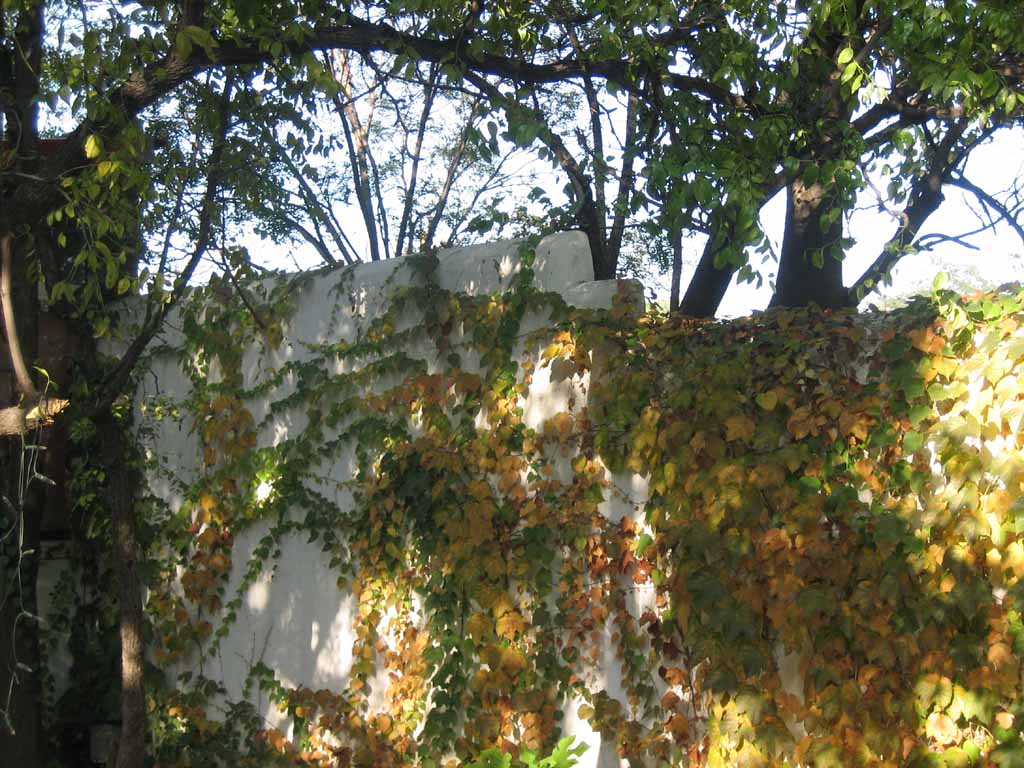 Fragrant Hills. It's about a 90 minute bike ride from Wudaokou. The sky was cloudy, so I wore my jacket. But I got delayed, because I had to stop by the lab for a bit. They ghosted the machines last night because of viruses, and I wanted to check to see that the Oracle image was intact. So by the time I got going, the sun had burned off the morning fog, and the sky had turned to deep blue. I wasn't on the road more than 15 minutes before I was down to my T-shirt. That's autumn for you. You really can't beat a North China autumn. And Fragrant Hills is covered with leaves turning color. This time of the year, the tourists are mobbing the place, so if you sit in the front part of the coffee bar, you will hear the noise (and I do mean noise) from the street. So go out into the back yard and grab a table under a tree. Put your feet up. It isn't everybody's cup of tea (or coffee) I guess; lots of folks can think of better things to do on a pleasant Saturday than sitting in the autumn leaves reading a good book. I sure can't.
Thursday, October 16, 2008
 Third and final debate this morning on the big screen at the Bridge Cafe. Brian is a strong supporter of Obama, but he opened it up for everyone. I thought it was a pretty strong performance by McCain, but it does look like Obama has the momentum. Personally, I think that whole business about Bill Ayers was a non-starter. Nobody remembers that. The Weathermen were pretty violent people, but they were active when I was in high school, or maybe even junior high. I can't even remember, and you can be sure no one else can either. But more specifically, it misses the point. Obama is not a terrorist. He is a liberal. I remember when Dukakis was running for president, many Democrats were complaining about being labeled with the "L" word. But they did deserve the label. And so does Obama. He is liberal. And he was not honest about his votes in the Illinois legislature. It is a fact that children born alive (during abortions) were being left to die, and it is also a fact that he steadfastly resisted attempts to provide legal protection for them. Four times. He deserves to be called a liberal. But calling him a terrorist makes him a victim, and generates sympathy. Furthermore, using Sarah Palin to make the case was ill-advised. She was a very small child when that stuff was going on. It couldn't be something she remembered.
 But I was also interested in something that most people in America may not relate to, at least in the way I do. I live in China. Obama mentioned China again this morning, as I expected him to. He does not like the fact that American jobs are going to China, and while I do not blame him for that, it is definitely not a good idea to restrict trade in order to compensate for America's overpriced labor. I saw it happen to Japan. America put pressure on them to revise their currency. Japan's relationship with the United States was such that it was not easy for them to refuse. It flattened the Japanese economy. When I mention this issue, many people tell me that the American president cannot have much influence over this, but I'm not so sure. Bush has actually had quite a bit of influence in this area. This is one reason why many Americans are upset with him. Obviously, I don't feel quite the same way. Interesting how our own life situations affect the way we see things. But it isn't just the fact that I live in China. I was a free trader long before I came here. In the short run, free trade does hurt some people. But in the long run, it is good for everyone, including the ones who initially had to take the hit.
Monday, October 13, 2008
Picked up a used book today from a street merchant. NAPOLEON The Myth of the Savior. Obviously, it's a biography of Napoleon. I'm a little weak on my French history; it hasn't really been my main focus of interest recently. But perhaps if I read this book, I can start War and Peace again and make sense of it. Sometimes it helps to view a great conflict from the other side. I recently read the biography of Alexander II (grandson of the Czar Alexander I, who plays such a prominent role in Tolstoy's great novel). If I get a little better background on the "Little Colonel," I might be ready to go back and make a stab at Tolstoy. (That was intended as a completely non-violent expression.)
Saturday, October 11, 2008
Michael and I went to the CCTV studio out on the west side near the military museum to tape a couple shows for "Up Close." The subject was foreigners living in China. The guests were two foreigners, one from India and one from the States, both of whom had been in China for more than thirty years. If you are familiar with the history of China in the early "opening up" days, much of it would be review, but it was interesting hear a discussion about that difference between how Americans were treated as against those from developing nations, such as India. As you know, during those days, foreigners could not just go anywhere. And they couldn't just live anywhere. The American lady lived in the Beijing Hotel, and the guy from India lived in the Friendship hotel. Both of them described a very international environment, but the American said the Beijing Hotel was like living in a College dormitory. In contrast to this, the Friendship hotel seems to have been much more of a melting pot of different kinds of international people.
The American lady also said that anyone who associated with her was questioned by their work unit on Monday morning. Suspicion of foreigners didn't begin with the Americans, of course--it's been part of China's history for a long time. Hudson Taylor certainly encountered it. But the kind of uneasiness that Americans in China had to live with in the years immediately following the Cultural Revolution seems to have been a unique function of the cold, uncomfortable relationship between the two countries during the Cold War, especially given the relationship between the U.S. and Taiwan, and the presence of the Seventh Fleet in the Taiwan Strait during those years.
The American lady also said that anyone who associated with her was questioned by their work unit on Monday morning. Suspicion of foreigners didn't begin with the Americans, of course--it's been part of China's history for a long time. Hudson Taylor certainly encountered it. But the kind of uneasiness that Americans in China had to live with in the years immediately following the Cultural Revolution seems to have been a unique function of the cold, uncomfortable relationship between the two countries during the Cold War, especially given the relationship between the U.S. and Taiwan, and the presence of the Seventh Fleet in the Taiwan Strait during those years.
Sunday, October 05, 2008
 I brought a cake to the food court in the basement of the Disanji Book Building after church this morning. Tom is here from Arizona visiting Jordan, and today was his 50th birthday. The Disanji building is quite new, and the setup is very convenient for groups of people--one more indication that China is entering the modern world. You have to buy a card, then you can use the card at any window to order what you want. When you are finished, you can redeem your card, or you can save it for next time. If you are used to American fast food, you probably won't like it. The cuisine is definitely Chinese. Actually, I should say, "cuisines," because, as you know, China has seven or eight distinct cuisines. Personally, I like the eel, which is actually a Japanese dish. Eel is very nourishing, very easy to digest and very tasty. But it doesn't make you feel bloated. Good stuff.
Saturday, October 04, 2008
Rode my bike down to Nanluoguxiang yesterday, a seven-hundred-year-old area in the Dongcheng district. There are lots of coffee bars on that street, and the ride there is really nice on a beautiful autumn day. Autumn is the nicest time of the year in Beijing. The weather is moderate--not cold, not hot. And the old town area in Beijing is part of what makes this city so unique.
 I have seen my share of big cities. Most of them in North America, of course. I have always said that Los Angeles is the easiest big city in the United States. Remember, I was a truck driver. In L.A., every state highway is a six-lane freeway. New York and Boston are the two worst. Very narrow streets. Those cities were developed in the days when a 27-foot pup was considered a big trailer. They were definitely not designed for guys like me coming in from the Dakota's with a 53 ft. trailer.
The worst thing about Chicago is the low overpasses. In America, the standard clearance for a truck is 13 feet, six inches. Freeways are guaranteed to accommodate at least that height. But there are lots of low underpasses in Chicago. When I was pulling a flatbed, it wasn't that bad as long as I was hauling steel or aluminum, because with a load of steel, you could have all of your weight limit used up by the time you get two feet off the deck. But when I was pulling a reefer, it was a different matter. I was heading into Chicago on the Ike or the Stevenson one time--can't remember which--when I saw a guy going the other way with the whole top of this trailer ripped off and dragging behind him. If the cops had seen him they would have shut him down. Don't know if he made it to the truck stop or not. A local driver once told me, "I know every overpass in this town; met a couple of them personally." He said there was one that was actually 9 feet.
You can tell that my observations of American cities are largely influence by how they are for a truck driver, because that is the vantage point from which I saw them. I've never driven a truck in Asia. Here I am more concerned about getting around. So I will compare Beijing and Tokyo.
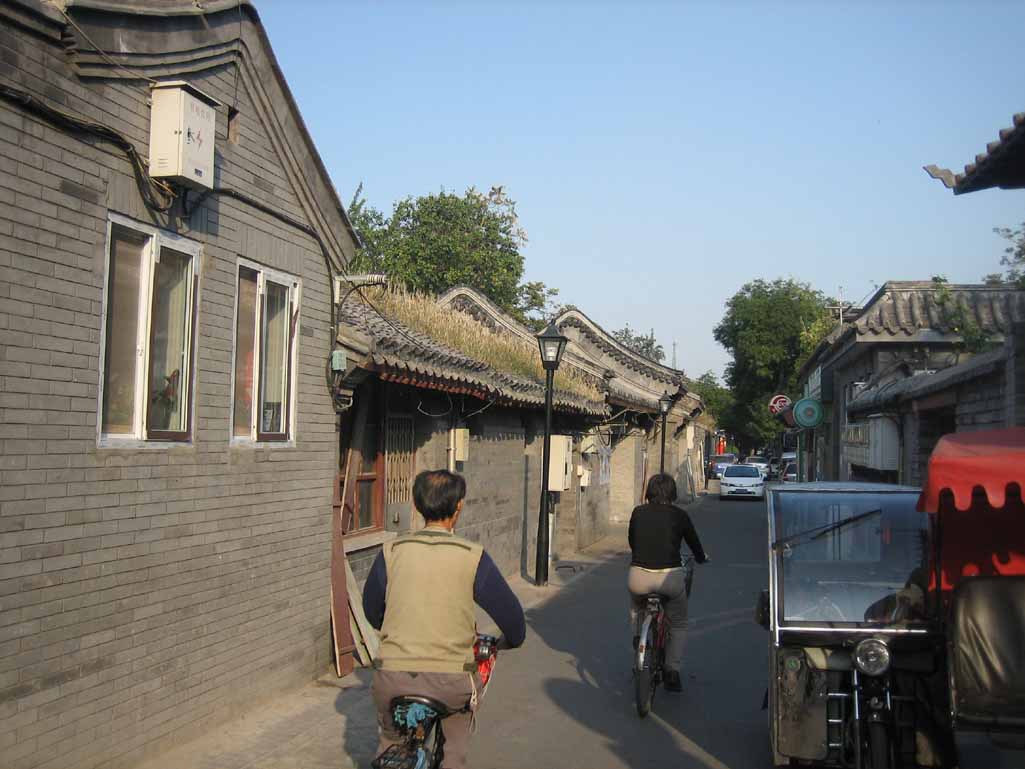
The subway/metro train arrangement in the Tokyo metropolitan area (I am including not only Tokyo as a Metropolitan district or province, but also Yokohama, Kawasaki, etc.) is impressive. They always say that you should never take a taxi in Tokyo. But you don't have to. You can take a train anywhere. It's very convenient that way. But you can't take a bicycle anywhere. That's why I really like Beijing. If there's a place you want to go to, you can get on your bike and ride to it. It sorta makes Beijing feel like a small town. Mind you, I don't actually use a bike to go down to the south part of Beijing. But almost anywhere on the north side is well within range of a 45 min to one hour trip. If you look at Line 2 (blue circle) on a Beijing subway map, you will see that many of the names along that loop end with "men." Xizhimen, Andingmen, Dongzhimen, Chaoyangmen, Jianguomen, Chongwenmen, Qianmen, etc. "Men" is the Chinese word for "gate." So those stops are situated at the gates to the old city wall. Anything within that circle is "old town" Beijing, and it's really interesting. I've just never seen a big city like this. If you want to take a bus, you can. If you want to take a taxi, you can do that, too. Or you can take the subway to Jishuitan, and flag a bicycle rickshaw. Or, like me, you can just hop on your bike and ride down there. I live on the south side of Wudaokou, which is three stops up on the Line 13 light rail extension. Not that far, really. Throw a few books in your basket, and maybe a water bottle. Cycle down College Road to Xueyuan Nan Lu (College Road South) and head east until you get to the Deshengmen gate. After you negotiate past that monstrosity, head southeast to the old drum tower and then turn west to Nanluoguxiang. Make your way south on that narrow old Beijing street, and take a turn on one of the several hutongs that run perpendicular (see picture) to it. Get lost for awhile, then mosey on back and find a coffee bar in one of the ancient buildings along Nanluoguxiang and put your feet up.
 I have seen my share of big cities. Most of them in North America, of course. I have always said that Los Angeles is the easiest big city in the United States. Remember, I was a truck driver. In L.A., every state highway is a six-lane freeway. New York and Boston are the two worst. Very narrow streets. Those cities were developed in the days when a 27-foot pup was considered a big trailer. They were definitely not designed for guys like me coming in from the Dakota's with a 53 ft. trailer.
 The worst thing about Chicago is the low overpasses. In America, the standard clearance for a truck is 13 feet, six inches. Freeways are guaranteed to accommodate at least that height. But there are lots of low underpasses in Chicago. When I was pulling a flatbed, it wasn't that bad as long as I was hauling steel or aluminum, because with a load of steel, you could have all of your weight limit used up by the time you get two feet off the deck. But when I was pulling a reefer, it was a different matter. I was heading into Chicago on the Ike or the Stevenson one time--can't remember which--when I saw a guy going the other way with the whole top of this trailer ripped off and dragging behind him. If the cops had seen him they would have shut him down. Don't know if he made it to the truck stop or not. A local driver once told me, "I know every overpass in this town; met a couple of them personally." He said there was one that was actually 9 feet.
You can tell that my observations of American cities are largely influence by how they are for a truck driver, because that is the vantage point from which I saw them. I've never driven a truck in Asia. Here I am more concerned about getting around. So I will compare Beijing and Tokyo.
The subway/metro train arrangement in the Tokyo metropolitan area (I am including not only Tokyo as a Metropolitan district or province, but also Yokohama, Kawasaki, etc.) is impressive. They always say that you should never take a taxi in Tokyo. But you don't have to. You can take a train anywhere. It's very convenient that way. But you can't take a bicycle anywhere. That's why I really like Beijing. If there's a place you want to go to, you can get on your bike and ride to it. It sorta makes Beijing feel like a small town. Mind you, I don't actually use a bike to go down to the south part of Beijing. But almost anywhere on the north side is well within range of a 45 min to one hour trip. If you look at Line 2 (blue circle) on a Beijing subway map, you will see that many of the names along that loop end with "men." Xizhimen, Andingmen, Dongzhimen, Chaoyangmen, Jianguomen, Chongwenmen, Qianmen, etc. "Men" is the Chinese word for "gate." So those stops are situated at the gates to the old city wall. Anything within that circle is "old town" Beijing, and it's really interesting. I've just never seen a big city like this. If you want to take a bus, you can. If you want to take a taxi, you can do that, too. Or you can take the subway to Jishuitan, and flag a bicycle rickshaw. Or, like me, you can just hop on your bike and ride down there. I live on the south side of Wudaokou, which is three stops up on the Line 13 light rail extension. Not that far, really. Throw a few books in your basket, and maybe a water bottle. Cycle down College Road to Xueyuan Nan Lu (College Road South) and head east until you get to the Deshengmen gate. After you negotiate past that monstrosity, head southeast to the old drum tower and then turn west to Nanluoguxiang. Make your way south on that narrow old Beijing street, and take a turn on one of the several hutongs that run perpendicular (see picture) to it. Get lost for awhile, then mosey on back and find a coffee bar in one of the ancient buildings along Nanluoguxiang and put your feet up.
Friday, October 03, 2008
Went to the Bridge Cafe for breakfast to watch the vice-presidential debate. As debates go, I thought they both did pretty well--no major mistakes on either side. It was interesting at first, but after awhile I found myself strangely distracted. My mind kept wandering from the debate such as it was, to the debate as it should have been. I couldn't concentrate on their answers to the questions being asked, because I was thinking about what their answers would have been to the questions that weren't being asked.
The biggest problem with the current election, is not how the candidates are answering questions--it is the subtle manner in which important questions have been sidelined so that they don't even get asked. There is no question that Sarah Palin was added to the Republican ticket because of her position on social issues like abortion that are important to conservative Republicans. But in the debate this morning, she wasn't asked anything about that issue, and when she was questioned about it in a previous interview, she went out of her way to emphasize her sympathy with those who disagree.
I am losing my enthusiasm for public figures who advertise their position on issues to their supporters, but back down from the fight when faced with those who oppose them. I hasten to add that I do not question Sarah Palin's sincere commitment to the right of the unborn to life. Her life speaks for itself. Still, it is deeply troubling to see a popular figure like Obama allowed to present himself as a compassionate leader, when he has consistently opposed any attempt to provide protection for children born alive during abortions in the State of Illinois. These precious little ones are left to die alone. He believes this practice should be allowed to continue.
In China, the debate is quite different. Here in China, the issue is forced abortion. So you could argue that in China, the pro-life people are pro-choice. They believe that a woman who wants to keep her baby should be allowed to do that. The issue of forced abortion plays out according to a tiredly consistent pattern. Whenever the issue comes up, the charge is denied by the government, and the whistle blower is arrested. In fairness, I should state that actual forced abortion/sterilization may not be happening as often as is sometimes reported; the larger problem in the countryside is the pressure on rural families who prefer to have several productive children, to self-limit their offspring to one or two. But the Western idea of a whole nation being forced to have small families against their will is certainly not accurate. Many professionals I talk to in the cities support their government's policy. Nevertheless, the pervasiveness of this policy would certainly give one reason to believe that abortion must be part of the process, even though it is rarely talked about.
But if there is need for moral leadership on this issue, where is it going to come from? Certainly not from America, where so many precious little lives are snuffed out every year in abortion clinics, and where innocent little babies born alive are allowed to die alone because politicians like Obama resist any attempt to protect them. It is at such a time as this that candidates who know the right should speak unapologetically for the right, and debate the issue vigorously, making it the center theme of the campaign, even if it means that they go down in defeat. Far better than winning is the knowledge that you have stood firmly against wrong and defended the poor and helpless without reserve.
"Open thy mouth for the dumb in the cause of all such as are appointed to destruction. Open thy mouth, judge righteously, and plead the cause of the poor and needy. (Proverbs 31:9-10)"
The biggest problem with the current election, is not how the candidates are answering questions--it is the subtle manner in which important questions have been sidelined so that they don't even get asked. There is no question that Sarah Palin was added to the Republican ticket because of her position on social issues like abortion that are important to conservative Republicans. But in the debate this morning, she wasn't asked anything about that issue, and when she was questioned about it in a previous interview, she went out of her way to emphasize her sympathy with those who disagree.
I am losing my enthusiasm for public figures who advertise their position on issues to their supporters, but back down from the fight when faced with those who oppose them. I hasten to add that I do not question Sarah Palin's sincere commitment to the right of the unborn to life. Her life speaks for itself. Still, it is deeply troubling to see a popular figure like Obama allowed to present himself as a compassionate leader, when he has consistently opposed any attempt to provide protection for children born alive during abortions in the State of Illinois. These precious little ones are left to die alone. He believes this practice should be allowed to continue.
In China, the debate is quite different. Here in China, the issue is forced abortion. So you could argue that in China, the pro-life people are pro-choice. They believe that a woman who wants to keep her baby should be allowed to do that. The issue of forced abortion plays out according to a tiredly consistent pattern. Whenever the issue comes up, the charge is denied by the government, and the whistle blower is arrested. In fairness, I should state that actual forced abortion/sterilization may not be happening as often as is sometimes reported; the larger problem in the countryside is the pressure on rural families who prefer to have several productive children, to self-limit their offspring to one or two. But the Western idea of a whole nation being forced to have small families against their will is certainly not accurate. Many professionals I talk to in the cities support their government's policy. Nevertheless, the pervasiveness of this policy would certainly give one reason to believe that abortion must be part of the process, even though it is rarely talked about.
But if there is need for moral leadership on this issue, where is it going to come from? Certainly not from America, where so many precious little lives are snuffed out every year in abortion clinics, and where innocent little babies born alive are allowed to die alone because politicians like Obama resist any attempt to protect them. It is at such a time as this that candidates who know the right should speak unapologetically for the right, and debate the issue vigorously, making it the center theme of the campaign, even if it means that they go down in defeat. Far better than winning is the knowledge that you have stood firmly against wrong and defended the poor and helpless without reserve.
"Open thy mouth for the dumb in the cause of all such as are appointed to destruction. Open thy mouth, judge righteously, and plead the cause of the poor and needy. (Proverbs 31:9-10)"
Thursday, October 02, 2008
I think I might be getting tired of going to Tiananmen Square on National Day. Boy, the subways were crowded, especially Line 1! I avoided the Xizhimen interchange by taking Line 10 to Line 5 and heading straight down to Dongdan. But Line 1 was really crazy. I used to feel sorry for sardines. Yesterday I envied them.
 People come to Beijing from all over the country, and this year many of them came to see the Bird's nest as well; tickets were 50 kuai just to get a look at the famous place where it all happened. But the Tiananmen Square itself is very big. You can have quite a crowd there, and still have room to move around. If you're a foreigner, you could end up spending a good bit of time posing for pictures. Sometimes it's just a matter of having flashes going off around you--one guy in the subway station kept walking backwards in front of me while he was taking pictures. But other times you have to let everyone in the family take turns standing by you, while Dad takes a portrait of each one. Folks from the countryside want to show the neighbors back home all the strange things they saw in the big city. I try to be good humored about it, because I take pictures, too. But I don't have quite as much nerve as some of the people who take pictures of me. God bless China.
 People come to Beijing from all over the country, and this year many of them came to see the Bird's nest as well; tickets were 50 kuai just to get a look at the famous place where it all happened. But the Tiananmen Square itself is very big. You can have quite a crowd there, and still have room to move around. If you're a foreigner, you could end up spending a good bit of time posing for pictures. Sometimes it's just a matter of having flashes going off around you--one guy in the subway station kept walking backwards in front of me while he was taking pictures. But other times you have to let everyone in the family take turns standing by you, while Dad takes a portrait of each one. Folks from the countryside want to show the neighbors back home all the strange things they saw in the big city. I try to be good humored about it, because I take pictures, too. But I don't have quite as much nerve as some of the people who take pictures of me. God bless China.
Wednesday, October 01, 2008
The world watches as the US Congress tries to decide what to do about the current market crisis. Yesterday, the vote against the bail-out happened too late to hit the morning paper. But this morning, it was all over the front page. That in spite of the fact that today is National Day in China. Granted, China Daily is a paper designed to present China to foreigners, so I guess it's understandable. Still, it reflects the level of importance China attaches to the current crisis. China owns a good portion of the US government, and is heavily invested in the market. The hurry with which this whole bail-out has been put together, combined with Nancy Pelosi's astounding decision, at the last minute, to make some political hay by turning the whole thing into a referendum on the Bush presidency, combined to give the waverers an excuse to bail out of the bailout.
I must admit to having mixed feelings about it myself. I am torn between the realization that the current crisis demands very decisive action to restore stability to the market, and a desire to see the market get the lickin' it deserves. We always say that those who take great risks are entitled to larger rewards. But now we have a situation where the risk takers went to far, and they are asking the government to rescue them. Doesn't seem right to me. According to the rules of the game, they should be required to take their losses, shouldn't they? Did they offer to share their profits with the country when they were winning?
And I'm not just talking about Wall Street. I must be old fashioned, but I cannot imagine what unearthly insanity would posses someone to buy a house with a variable rate mortgage--allowing the other guy to change the terms of the deal after the thing has been signed. It now appears that many homeowners across America were taking out mortgages not on the value of their homes, but on the eventual value of their homes. That's not investment. That's speculation. It's hard not to feel some sympathy for families who are losing their homes, but can you imagine how things would be different if everyone who purchased a home accepted only those terms that they would be able to meet regardless of what happened to the market price of their homes? Ironically, if everyone had done that, the prices probably would not have fallen, at least not as much as they did.
Warren Buffet gives two basic rules for investment:
1. Don't loose money.
2. Don't forget Rule #1.
It may seem overly simplified, but it does illustrate the basic principle of investment, in sharp contrast to the way speculators operate. Speculators "invest" money expecting to lose (you win some, you lose some), but hoping that they will win more often than they lose. Sometimes they get lucky and the gamble pays off. And other times....
Warren Buffet has always been a stickler about restricting his money to investment, and avoiding speculation like the plague. He only buys stuff that has actual value. True, he has missed some bonanzas. But he has also gained steadily at a rate that has been estimated to be the equivalent of putting your money in a savings account at 22% interest.
Real estate speculation is tempting, and it is quite common here in Beijing. If there is a property for sale at 700,000 RMB and you know it is overpriced, but you firmly believe that it will be selling for 800,000 RMB a year later, the temptation is to buy it, hold it for a year, and then sell it and collect the profit. People who do this don't care about real value, because they're not buying real estate to use it, they are buying it to make money. It's pure speculation. The problem with that game is that it always (and I do mean always) fails at some point, and the person who buys right before the point of failure loses and loses big.
The problem now, though, in Beijing, and I suspect also in America, is that there are many people buying overpriced real estate who really do need a place to live, and they are taking out huge loans in the hope that if they live in the place long enough, the real value will "catch up" with the market value, or at least the amount that they have the place mortgaged for, so that they don't lose their shirts. Oh, man, that is just way too scary. Folks here in Beijing who did that a few years ago are getting by with it (so far), but when you get a whole lot of people doing that in any economy, it is a prescription for disaster.
I must admit to having mixed feelings about it myself. I am torn between the realization that the current crisis demands very decisive action to restore stability to the market, and a desire to see the market get the lickin' it deserves. We always say that those who take great risks are entitled to larger rewards. But now we have a situation where the risk takers went to far, and they are asking the government to rescue them. Doesn't seem right to me. According to the rules of the game, they should be required to take their losses, shouldn't they? Did they offer to share their profits with the country when they were winning?
And I'm not just talking about Wall Street. I must be old fashioned, but I cannot imagine what unearthly insanity would posses someone to buy a house with a variable rate mortgage--allowing the other guy to change the terms of the deal after the thing has been signed. It now appears that many homeowners across America were taking out mortgages not on the value of their homes, but on the eventual value of their homes. That's not investment. That's speculation. It's hard not to feel some sympathy for families who are losing their homes, but can you imagine how things would be different if everyone who purchased a home accepted only those terms that they would be able to meet regardless of what happened to the market price of their homes? Ironically, if everyone had done that, the prices probably would not have fallen, at least not as much as they did.
Warren Buffet gives two basic rules for investment:
1. Don't loose money.
2. Don't forget Rule #1.
It may seem overly simplified, but it does illustrate the basic principle of investment, in sharp contrast to the way speculators operate. Speculators "invest" money expecting to lose (you win some, you lose some), but hoping that they will win more often than they lose. Sometimes they get lucky and the gamble pays off. And other times....
Warren Buffet has always been a stickler about restricting his money to investment, and avoiding speculation like the plague. He only buys stuff that has actual value. True, he has missed some bonanzas. But he has also gained steadily at a rate that has been estimated to be the equivalent of putting your money in a savings account at 22% interest.
Real estate speculation is tempting, and it is quite common here in Beijing. If there is a property for sale at 700,000 RMB and you know it is overpriced, but you firmly believe that it will be selling for 800,000 RMB a year later, the temptation is to buy it, hold it for a year, and then sell it and collect the profit. People who do this don't care about real value, because they're not buying real estate to use it, they are buying it to make money. It's pure speculation. The problem with that game is that it always (and I do mean always) fails at some point, and the person who buys right before the point of failure loses and loses big.
The problem now, though, in Beijing, and I suspect also in America, is that there are many people buying overpriced real estate who really do need a place to live, and they are taking out huge loans in the hope that if they live in the place long enough, the real value will "catch up" with the market value, or at least the amount that they have the place mortgaged for, so that they don't lose their shirts. Oh, man, that is just way too scary. Folks here in Beijing who did that a few years ago are getting by with it (so far), but when you get a whole lot of people doing that in any economy, it is a prescription for disaster.


