Links
- CV
- Titles
- Topics
- Tickets
- Science
- About Eric
- Book Reviews
- Country Profile
- Modern China
- Contact Eric
- Podcast
- Vision
- Sekai
- John
Archives
RSS

Reflections on a Wandering Life.....
Thursday, July 08, 2021
My Facebook Censorship

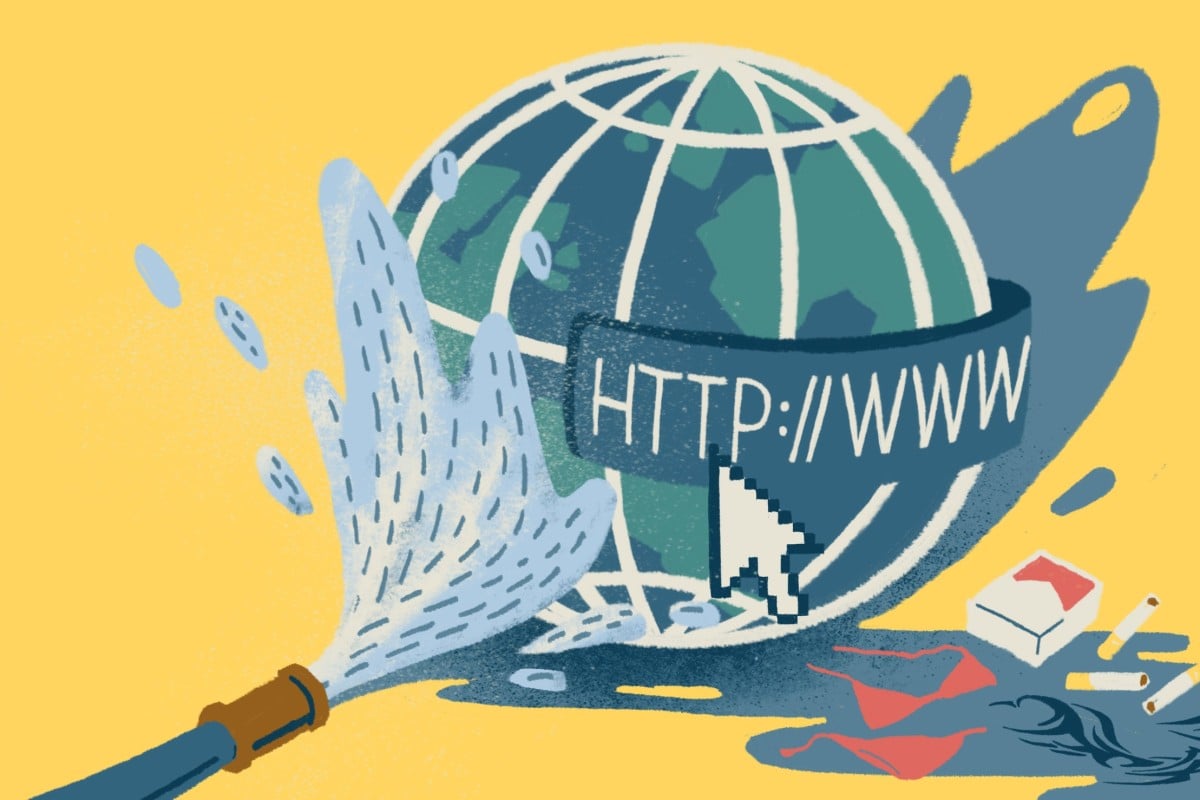
This is the message I get when I try to post a link to my blog on Facebook.
Censorship. I have written about it before, because it is a big issue in China. The government considers itself responsible for watching what people should be allowed to see or hear. But every government does that much, I guess. Where it becomes an issue for Americans is when the government censors political opinions. That is considered an assault on freedom of speech. So it should be of interest that even though I live in China, my experience with censorship of my opinions came, not from China, but from the United States.
That’s not quite true. Blogspot is blocked in China. But the whole website is blocked. This is the first time that my blog in particular was censored because of something I said which, although completely true (I was not censored for saying something false), was nonetheless considered unsuitable for the average Facebook user.
Now some may question how I know that this is censorship, and not merely an enforcement of the rules. Perhaps the best thing I can do is just tell you the story and you can decide for yourself.
Back in February of 2020, I wrote a blog post that featured the Moody Science film, “Red River of Life.” This is an amazing science documentary that I first saw when I was in high school fifty years ago. Amazingly, that film is not outdated at all. You can see that some of the equipment is quite out of date. But the conclusions made in that film are every bit as accurate as they were when I saw it at Hillcrest Academy.
But why would Facebook censor me because of a science film? Well, because I made a comment about one of the Democratic candidates. Pete Buttigieg is from Indiana, and he had assumed that when he ran for president, Vice President Pence (who is also from Indiana) would lash out at him because he is a homosexual. Mayor Peter kept waiting and waiting for Pence to attack him. He even wrote a response to the anticipated attack. But the attack never came. So instead of dropping the issue, Buttigieg published his response to the attack that had never been made. It was a completely dishonest thing do to, but the media played right along with it. The ABC headline says “Mayor Pete Buttigieg and Vice President Mike Pence escalate feud over religion and sexuality.” Not true. Pence never said anything about it until he was asked, and his response was very professional. Read the article.
So I was irritated with Buttigieg’s creation of a false issue, responding to an attack that Pence never made. But if I wrote a blog post every time a politician said something dishonest, I wouldn’t have a life. So I found a very well written rebuttal of Mayor Pete’s dishonesty, posted it on Facebook, and let the matter go.
But later I saw something that I could not let pass. Mayor Pete said that the Bible associates life with breath, so since babies don’t breathe, it’s okay to kill them. That was simply beyond the pale and demanded a response.
His comment brought to mind a Moody science film I had seen more than fifty years ago when I was in high school. Believe it or not, I found it on YouTube. It’s called “Red River of Life.” When I was in high school, the debate at the time was not between heartbeat as an indication of life and breath as an indication of life. It was between heartbeat and brain wave. People were saying that a person should be considered dead if they had a flat brain wave, because then we could keep their heart beating, and harvest their organs. Without getting sidetracked by that debate, let me just say that the Bible is very clear on this issue. Leviticus 17:11 says, “The life of the flesh is in the blood…”
So the movie is not about abortion at all—it came out before Roe v. Wade. But it is a very good film and amazingly current even after fifty years. I used it because it directly addresses the issue of what constitutes life. But I am quite sure that the Facebook censors were not concerned about the movie. They were angered because I dared to criticize a prominent Democrat politician. But the issue I was addressing in my blog post was not his homosexuality. It was his dishonesty. If you did not know Mayor Pete, and read my article, you would not was not know he was a homosexual. I did not mention it in my blog post. I did address his lack of integrity, and I won’t back down from that. Pete Buttigieg is a deeply dishonest individual. Recently he was caught hauling his bicycle in a van to within a few blocks of his office so that he could be seen riding it to work.
But he’s a Democrat, and Facebook censors went ballistic. What happened next is the focus of today’s post. They blocked any reference to my blog from Facebook. Then they deleted all my Facebook posts that contained any link to my blog. Completely gone. No way to retrieve them. If you look above, you will see the notice I get if I try to link to my blog from Facebook. The notice says that my blog violates Facebook’s spam policy. So so let’s take a look at that policy. You can clearly see that merely linking to a different location does not constitute spam. If it did, then it would not be possible to link to other sources. In fact, years ago, Facebook had it set up so that I could have my blog posts automatically posted as a note on Facebook as soon as I submitted them.
What can I do? Can I sue them? Well, in a civil suit, you need to show damage. Technically, there was some damage, because they deleted a bunch of my Facebook posts. But every post they deleted was mainly just a link to my blog, and my blog was not affected, just the link to my blog in Facebook. I guess I could sue them for the inconvenience they created for me, but that would be tough too. You see, it’s not really more inconvenient for me, it’s just a little more cumbersome for Facebook readers. Facebook does not block links to Twitter at all. I can link to my Twitter account all I want. And Twitter does not block my blog. So now I have to put my blog link in Twitter and the Twitter link in Facebook. So Facebook readers have an extra mouse click, because they first have to go to the Twitter post, and then they can get to the blog post. It is a little inconvenient for those who come to my blog from Facebook, but it doesn’t really affect me that much, so I don’t know if there is any way to sue them. But I do think they should be denied immunity under Section 230 of the Telecommunications Act of 1996.
Facebook is a private company, so they do have a right to restrict content that they do not agree with. They were not breaking the law when they deleted my posts. Editors do it all the time. Facebook is not required to be neutral. But then, in my opinion, they should not be entitled to the Section 230 provisions. And maybe someday nobody will be entitled to those provisions. Both Trump and Biden oppose 230 (although possibly for different reasons). What is really needed more than anything else is competition—the belief that both ideas should be allowed to be expressed, then debated, so that readers can decide for themselves which idea is most credible, and best substantiated by solid evidence and reasoning. I thought that’s what Facebook was. But recently, we have seen rogue staffers using Facebook rules falsely as a means of restricting content that does not comport with their left wing bias. If you slap an obscenity warning on something, it should be because that content actually contains obscenity, not because it contains truth that you find inconvenient. These people are not decent moral human beings. They are unprincipled scoundrels who hate anything that looks to them like holding up an absolute moral standard as a measure by which to judge society. But as Francis Schaeffer noted years ago in his ten-part series on Western civilization (How Shall We Then Live), “If there are no absolutes by which to judge society, the society is absolute.”
Labels: Abortion, Censorship
Tuesday, April 30, 2019
Censorhip in China--The Good Kind and the Bad Kind
I should make clear that I do not believe censorship is inherently immoral. Some people do, but I don't. Everybody censors something at some time. You censor what you let others see of your own diary. You censor what you allow children to see. We may find censorship distasteful, and we will often argue about what should or should not be censored, but no one can say that all censorship is bad all the time.
But dishonesty is despicable, and the dishonesty in the Chinese media has always bothered me much more than the censorship. I don't think the censor featured in this SCMP article is a bad guy. I think he's a good guy. You may not agree with what he (or his company) considers offensive material, but I think you will agree that he is not a bad guy. He's just an honorable man doing his job.
Click for article.
This piece seems to show what I call the "good" side of censorship, which is removal of offensive content (though there can certainly be debate about what should be considered offensive). Maybe I am a bit cynical, but I think the reason this entity within China was so open to giving outsiders an inside view is because it takes attention away from the dark side of censorship, which is excessive control of individual expression.
The watershed moment for the dark side of censorship in the Chinese media was the extraordinary event in January of 2013, when the propaganda guy from the Southern Weekly edited a New Year's message, but left the bylines alone, implying that the writers of the original piece had written the new, sanitized version. The anger which ensued from this event resulted in a strike--very unusual in China--where the paper was actually shut down.

I refer to that event as a watershed moment, because it showed that the powers that be are not only committed to "good" censorship, but that they defend their right to control information and even falsify information for the purpose of influencing the thinking of the people.
Begin your study of that incident with the Freedom House article. Then if you want more detail, the Wikipedia article is also good. As you study those two articles, what emerges is not just the dishonesty, but the excessive micro-management of the message. And how ironic that what they had intended to keep secret has been shouted from the housetops.
But there is good news, too. Another thing that comes out as you study that incident, is that there are many decent journalists in the Chinese media who really do want to do a professional job of bringing the truth to light. They are not just kissing up to the powers that be. I remember at the time the head of the Beijing News famously refused to publish the government ordered propaganda statement following the incident. Sina Weibo published it, but with a statement that it was published under duress. These are only a couple examples. The response of conscientious journalists in China to this incident is a heartwarming story that needs to be told. There should be a movie. So I am actually more optimistic about journalism in China than in America.
When I first came to China fifteen years ago, I often wondered where Chinese "journalists" got their education, because there was so much editorializing in news articles. The Southern Weekly incident taught me that part of the reason for my jaded view was because I only read the English language propaganda papers, not the real journalistic enterprises such as Southern Weekly, or Beijing News, which do not have English language versions. And never did I imagine that I would one day see American media outlets becoming worse than what I see in China. American "journalism" has really gone downhill in terms of basic journalistic integrity. I think there's actually more propaganda in the American media now than in the Chinese media. Not government propaganda, but propaganda nonetheless.
The Southern Weekly incident is really the "Tiananmen Square" of journalism in China. And I say the same thing about the courageous journalists from the Southern Weekly as I say about the young people at Tiananmen in 1989: They lost the battle, but won the war. Stay tuned.
The Southern Weekly is a mainland paper that "pushed the envelope" in presenting news as openly as possible under the circumstances. There are basically two kinds of newspapers in China: the government propaganda papers (Global Times and China Daily), and independent papers such as Southern Weekly and the Beijing News. The government propaganda papers contain lots of scripted propaganda. The independent papers are not generally controlled by Beijing, but they are regulated, which means their content is not actually written by Beijing, but can be censored by Beijing. The Chinese name of the Southern Weekly translates literally to "Southern Weekend," but that sounds a little strange in English, so it is usually anglicized as "Southern Weekly."
Labels: Censorship, Chinese Media, Internet
Wednesday, November 28, 2018
Censorship in China
Wednesday, January 16, 2013

Fascinating story developing in China the past few weeks. The South China Weekly (南方周末), which has a reputation for being a little more independent than the main propaganda papers in China, published a New Year's editorial calling for constitutional government. In China, as you may know, all newspapers are subject to having articles checked by the local propaganda minister. But the Guangzhou area has a new propaganda minister. Instead of blocking the article, he rewrote it and made it a tribute to the Communist Party. The young journalists responsible for the editorial blew a gasket. They hit the streets and threatened to shut down the paper. This is unprecedented in China. Well, Party Central knew they had to do something. So the Global Times (print edition of the People Daily) put out an editorial scolding the 南方周末 reporters and informing them that they could not expect to have complete press freedom. The Party then ordered several news outlets to publish this editorial. The news outlets complied, but included a statement emphasizing that they were publishing the editorial because they had to, not because they agreed with it. This was, in effect an editorial. I have also heard that the editor of the Beijing News has resigned over the issue, which I have not been able to confirm. I have never seen this kind of open rebellion on the part of the Chinese media. In the picture, you can see an expression of support disguised in a news article (circled in red). The first four characters are the name of the paper (南方周末). The next two characters spell "jia you," which literally means "add oil (or gasoline)," but can also mean "step on the gas," or "refuel." It's a common cheer at athletic events. This kind of thing is reminiscent of Tiananmen, where three hundred journalists from the People Daily carried a huge banner that read, "Do not believe what we write. We print lies." Clearly the local propaganda minister overstepped. He certainly did not expect the reaction--a reaction which created a permanent change in the landscape. The times they are a changing.
Labels: Censorship, Chinese Media
