Links
- CV
- Titles
- Topics
- Tickets
- Science
- About Eric
- Book Reviews
- Country Profile
- Modern China
- Contact Eric
- Podcast
- Vision
- Sekai
- John
Archives
RSS

Reflections on a Wandering Life.....
Wednesday, April 29, 2020
Wuhan Virology Lab - Guilty or Innocent?
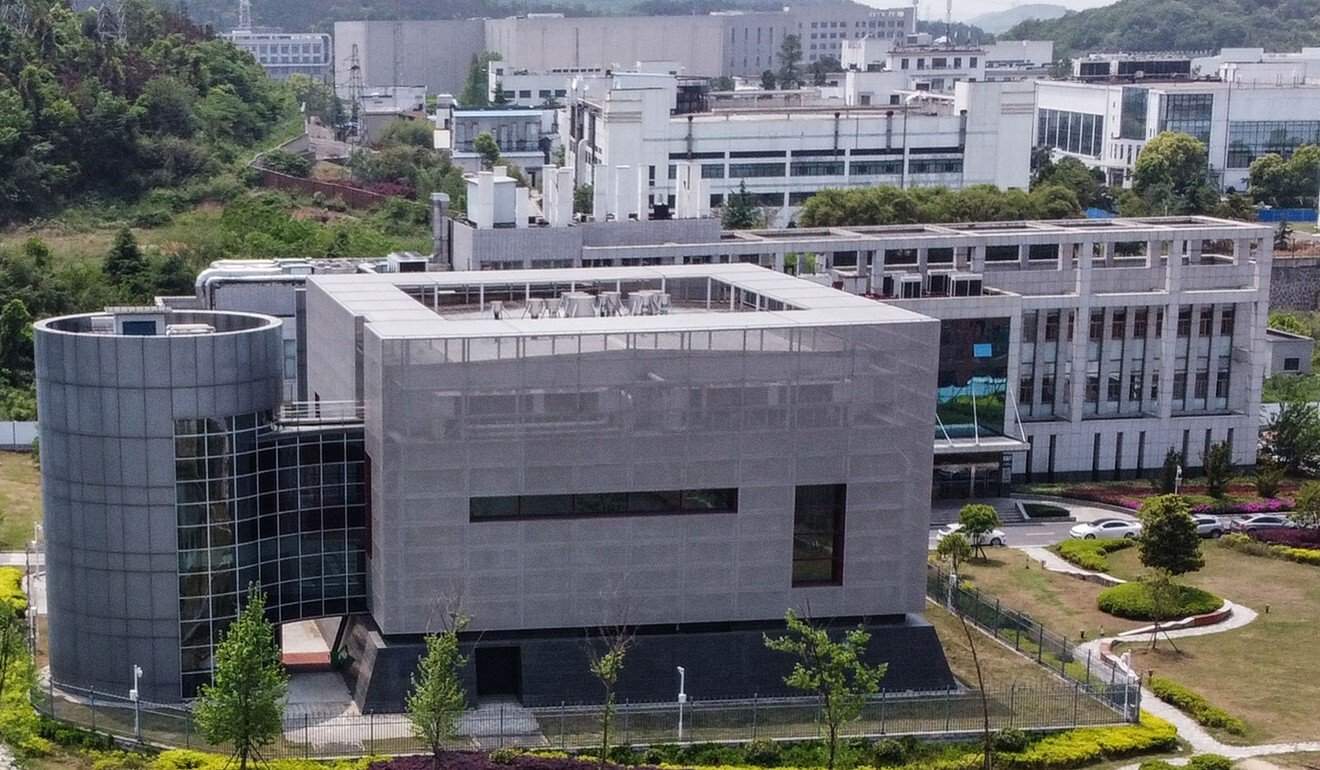
Wuhan Virology lab that has been the center of controversy.
Click to read Zhang Pinghui's article in the Post.
Extraordinary article in the South China Morning Post in defense of the virology lab in Wuhan that has become the center of controversy as a possible source of the current Cornoa virus outbreak.
The South China Morning Post has itself been a center of debate relative to how much it is "controled" by Beijing. To be clear, the South China Morning Post is not and never has been a Chinese newspaper. It has always been a Hong Kong colonial paper going back to the beginning of the 20th century. As such, under the "one country, two systems" arrangement, China does not have the power to supress articles. But the South China Morning Post is not owned by westerners any more. Most recently, it was owned by the Kwok family, but was purchased a few years ago by Jack Ma, the founder of Alibaba.
So there has always been debate about the extent to which the content of the South China Morning Post is "influenced" by Beijing. Generally speaking, I have had a favorable opinion of the South China Morning Post for a couple reasons:
- It is so much better than mainland papers whose content is either dictated by Beijing, or tightly restricted and censored.
- It is so much better than western papers (especially American) that are not subject to control by the Beijing government, but are woefully clueless about things China.
Two years ago, the Americans made several visits to the lab and expressed grave concern about the level of safety employed there. They were very worried that an accident could produce a worldwide catastrophe, and were disturbed by the level of carelessness with which the lab was being operated.
Why did she leave that information out? If it's because she was not aware of it, then she is incompetent. But if she was aware of the concerns expressed two years ago and chose not to mention them, one has to question her objectivity as a journalist. Read what she says and see what you think.
Barring an unusual breakthrough, such as a whistle blower or something, we are still quite a long way from proving that the Corona virus came from that lab (if indeed it did). But just the same, it would be grossly irresponsible to eliminate it as a possibility. Hasty dismissals are just as irresponsible as any other rush to judgment. And it is nonsensical to call the belief that the Corona virus came from that lab a "conspiricy theory." Most people who believe it came from the lab also believe that it was an accident. An accident cannot be a conspiracy.
Mind you, there are still people who think it could have come from a natural animal to human transition. I know that for a fact, because I am one of them. I am not at all finalized on the idea that it came from this lab. But given the fact that circumstantial evidence seems to point in that direction, it should be investigated.
China is a sovereign nation, and as such China is sensitive about other nations telling her what to do (especially given the colonial history). But considering the fact that the Americans poured $3.7 million into that lab, and considering the grave concerns expressed two years ago, the Americans have good reason to request that they be allowed to investigate what role, if any, the Wuhan Virology Lab may have played in the current disaster.
Labels: Chinese Media, Corona virus 2020
Tuesday, April 30, 2019
Censorhip in China--The Good Kind and the Bad Kind
I should make clear that I do not believe censorship is inherently immoral. Some people do, but I don't. Everybody censors something at some time. You censor what you let others see of your own diary. You censor what you allow children to see. We may find censorship distasteful, and we will often argue about what should or should not be censored, but no one can say that all censorship is bad all the time.
But dishonesty is despicable, and the dishonesty in the Chinese media has always bothered me much more than the censorship. I don't think the censor featured in this SCMP article is a bad guy. I think he's a good guy. You may not agree with what he (or his company) considers offensive material, but I think you will agree that he is not a bad guy. He's just an honorable man doing his job.
Click for article.
This piece seems to show what I call the "good" side of censorship, which is removal of offensive content (though there can certainly be debate about what should be considered offensive). Maybe I am a bit cynical, but I think the reason this entity within China was so open to giving outsiders an inside view is because it takes attention away from the dark side of censorship, which is excessive control of individual expression.
The watershed moment for the dark side of censorship in the Chinese media was the extraordinary event in January of 2013, when the propaganda guy from the Southern Weekly edited a New Year's message, but left the bylines alone, implying that the writers of the original piece had written the new, sanitized version. The anger which ensued from this event resulted in a strike--very unusual in China--where the paper was actually shut down.

I refer to that event as a watershed moment, because it showed that the powers that be are not only committed to "good" censorship, but that they defend their right to control information and even falsify information for the purpose of influencing the thinking of the people.
Begin your study of that incident with the Freedom House article. Then if you want more detail, the Wikipedia article is also good. As you study those two articles, what emerges is not just the dishonesty, but the excessive micro-management of the message. And how ironic that what they had intended to keep secret has been shouted from the housetops.
But there is good news, too. Another thing that comes out as you study that incident, is that there are many decent journalists in the Chinese media who really do want to do a professional job of bringing the truth to light. They are not just kissing up to the powers that be. I remember at the time the head of the Beijing News famously refused to publish the government ordered propaganda statement following the incident. Sina Weibo published it, but with a statement that it was published under duress. These are only a couple examples. The response of conscientious journalists in China to this incident is a heartwarming story that needs to be told. There should be a movie. So I am actually more optimistic about journalism in China than in America.
When I first came to China fifteen years ago, I often wondered where Chinese "journalists" got their education, because there was so much editorializing in news articles. The Southern Weekly incident taught me that part of the reason for my jaded view was because I only read the English language propaganda papers, not the real journalistic enterprises such as Southern Weekly, or Beijing News, which do not have English language versions. And never did I imagine that I would one day see American media outlets becoming worse than what I see in China. American "journalism" has really gone downhill in terms of basic journalistic integrity. I think there's actually more propaganda in the American media now than in the Chinese media. Not government propaganda, but propaganda nonetheless.
The Southern Weekly incident is really the "Tiananmen Square" of journalism in China. And I say the same thing about the courageous journalists from the Southern Weekly as I say about the young people at Tiananmen in 1989: They lost the battle, but won the war. Stay tuned.
The Southern Weekly is a mainland paper that "pushed the envelope" in presenting news as openly as possible under the circumstances. There are basically two kinds of newspapers in China: the government propaganda papers (Global Times and China Daily), and independent papers such as Southern Weekly and the Beijing News. The government propaganda papers contain lots of scripted propaganda. The independent papers are not generally controlled by Beijing, but they are regulated, which means their content is not actually written by Beijing, but can be censored by Beijing. The Chinese name of the Southern Weekly translates literally to "Southern Weekend," but that sounds a little strange in English, so it is usually anglicized as "Southern Weekly."
Labels: Censorship, Chinese Media, Internet
Wednesday, October 24, 2018
Naptime Beijing Style
Labels: Chinese Media, Lifestyle, New York Times
Wednesday, January 16, 2013

Fascinating story developing in China the past few weeks. The South China Weekly (南方周末), which has a reputation for being a little more independent than the main propaganda papers in China, published a New Year's editorial calling for constitutional government. In China, as you may know, all newspapers are subject to having articles checked by the local propaganda minister. But the Guangzhou area has a new propaganda minister. Instead of blocking the article, he rewrote it and made it a tribute to the Communist Party. The young journalists responsible for the editorial blew a gasket. They hit the streets and threatened to shut down the paper. This is unprecedented in China. Well, Party Central knew they had to do something. So the Global Times (print edition of the People Daily) put out an editorial scolding the 南方周末 reporters and informing them that they could not expect to have complete press freedom. The Party then ordered several news outlets to publish this editorial. The news outlets complied, but included a statement emphasizing that they were publishing the editorial because they had to, not because they agreed with it. This was, in effect an editorial. I have also heard that the editor of the Beijing News has resigned over the issue, which I have not been able to confirm. I have never seen this kind of open rebellion on the part of the Chinese media. In the picture, you can see an expression of support disguised in a news article (circled in red). The first four characters are the name of the paper (南方周末). The next two characters spell "jia you," which literally means "add oil (or gasoline)," but can also mean "step on the gas," or "refuel." It's a common cheer at athletic events. This kind of thing is reminiscent of Tiananmen, where three hundred journalists from the People Daily carried a huge banner that read, "Do not believe what we write. We print lies." Clearly the local propaganda minister overstepped. He certainly did not expect the reaction--a reaction which created a permanent change in the landscape. The times they are a changing.
Labels: Censorship, Chinese Media
Thursday, June 09, 2011
US public prefers parochial view of world
As I mentioned in a post a couple weeks ago, there is a misconception among foreigners in China regarding Chinese news outlets. Some seem to be under the impression that every news report they see in China is propaganda dictated from the highest echelons of the Party. In fact, much of the time, even government news outlets are left alone to do their job, as long as they do not present reports that portray the Communist party negatively. CCTV is a very high dollar outfit, which the Party keeps handy to use for its purposes. But this means that if you are watching news about something going on in other parts of the world, the coverage can actually be quite good.
The problem in China though, is that local news is quite limited. China is great at reporting about what is happening on the other side of the world, as a distraction from what is happening here in China. Most notable recently is the blocking of any mention of the protests in Inner Mongolia. Go to any Chinese media outlet web site, and do a search for any news about the Inner Mongolia protests last week. Nothing. These protests are profoundly significant, because they are the most volatile protests in 30 years, and because Mongolians are usually held up as an example of a minority that generally gets along quite well with the idea of being Chinese, while still retaining their cultural identity. But news about these protests is completely unreported in the Chinese media. This is a very common occurrence in China. In China I have actually been told, "If I want to know what is going on in my country, I need to ask a foreigner." Chinese people tend to be the last to know about what is going on in China.
But it isn't just local news. CCTV does have some very informative news reports about news in other countries. But it also puts out misinformation when it is ordered to do so by the Party. And they don't announce it. In all the years I have been in China, I have never heard an announcement like "We interrupt our newscast to bring you some misinformation from the Communist Party." They just sort of slip it in and hope you don't notice. For example, several years ago, when China was going through a "hate Japan" phase, I was watching CCTV and there was a report on the buildup of the Japanese military. Those of you who know the history will know that, in fact, Japan doesn't have a military. It was proscribed by the constitution MacArthur wrote for the Japanese people after World War II. Japan does have a defense force, but it is a rather docile outfit. I suppose the CCTV propagandists felt that if they showed an actual clip of the Japanese defense force, it would not inflame emotions the way they wanted, so they slipped in some footage of the North Korean army. You can imagine my bemusement. I'm listening to a report on the buildup of the Japanese "military," while the North Korean army is goose stepping across the screen. You might wonder how they thought they could get by with that. I suppose they figured they had kept the average viewer ignorant enough so that they wouldn't know the difference. They would have to have been quite ignorant indeed, because the North Korean army has a very distinctive uniform. It doesn't look at all like the Japanese defense force. But, sad as it is to say, I would venture that the majority of viewers bought it hook, line, and sinker. Maybe that's why, when I tell people that I am from Japan, they often respond with "We hate Japanese." That hatred is very carefully crafted by China's government media, and swallowed whole by viewers who have been discouraged from thinking critically from the day they were born, and proceeding throughout their entire education.
So the two problems in China are lack of information, and misinformation. American viewers have the opposite problem. It is information overload. And that overload includes a very high dosage of trivia. Americans are so busy trying to find out which movie star is having an affair with whose husband, that they don't have time to even think about anything really important. So Americans tend to know a whole lot about really trivial stuff. American students are not discouraged from thinking critically the way Chinese students are. They would never tolerate the propaganda foolishness that Chinese people take for granted. But the problem with Americans is that they are never really required to think at all. So Americans also do not tend to think critically. This is why I have often said that the two most ignorant groups of young people I encounter are Chinese young people and American young people. The Chinese are ignorant because they always have only half the story (if that)--the half the Party wants them to have. And Americans are ignorant because they have very independent ideas, but precious little truly important information. News outlets in America are largely driven by advertising, so they publish what the people with the most money want to read or see. News outlets in China are not all controlled by the Party. There are many independent news outlets that are not required to publish Party propaganda. But the Party can and does order them not to contradict the Party line, and also forbids them from publishing articles relative to certain issues the Party does not want the people to know about (such as the current unrest in Inner Mongolia).
Now, that having been said, I do watch CCTV. I like being able to walk in and turn on the TV to get a quick news report. When I first moved out here to the village, I thought perhaps I would not get a TV. But I found that I missed CCTV, so I finally got a small 13 inch TV. I don't watch it a lot, but I do like having it available. And it's a refreshing reprieve from the information overload and incessant advertising of American television. But you do need to watch it critically.
And I buy the China Daily every day. The China Daily has some fascinating feature articles about ordinary people in China. I say "ordinary," but in fact, many of them are actually quite extraordinary. When it comes to national and international news, however, China Daily is rather pathetic, except for the reports from international wire services. There are "debates" in the China Daily, and they are announced as "debates" in big letters to show that China allows "debate," but the "debates" are sterile and boring, because they can never touch anything political. You would absolutely NEVER see a debate about the merits of allowing Tibet to be independent, or whether or not China has a right to take Taiwan by force. Never. You see debates like, "Should apartment buildings in South China be equipped with hot water radiators like the apartment buildings in North China?" But this is reasonably easy for we foreigners to live with, because we have so many other ways to get information, and it is easy for Chinese people to live with, because if you've never been allowed to think for yourself, you wouldn't know what you were missing.
Li Congjun, president of the Xinhua News Agency, wrote an interesting OP-ED piece on this subject for the Asia Wall Street Journal the other day. His article complains about the imbalance in the flow of information between East and West (much more information flows from West to East than from East to West), and suggests "negotiation" to address this problem. He talks about establishing international "rules" that will correct the imbalance. Reading between the lines, what he seems to want is for the Western media to place more control on their output, so that China's media controls won't look so obvious. This will help the international media to become an "active force for promoting social progress." It's not going to happen, Mr. Li. The purpose of the media is not social engineering. It is about allowing the free flow of information, so that free citizens can make informed decisions. What Mr. Li doesn't say, is that a big part of the imbalance of the flow of information from West to East has to do with news about China.
Zhao Ziyang was the premier who refused to approve the Tiananmen Massacre. He was very influential in introducing economic reforms in China, and had a lot to do with the initial opening up of China after the Cultural Revolution. But he fell out of favor with Deng Xiaoping, because he refused to approve the slaughter of young people at Tiananmen. He was placed under house arrest for the rest of his life.
Zhao Ziyang died in January of 2005. I remember reading about it in the Wall Street Journal at the coffee bar. There was lots of information about what Zhao Ziyang had done for China (in terms of economic reforms), along with several editorials concerning the state of reform in the Country. After reading and mulling over this information for a couple hours over a cup of coffee, I walked out into the street and bought a copy of the China Daily. The sum total of everything the China Daily had to say about Zhao Ziyang's passing was encapsulated in one terse article. The one statement that caught my attention was
In the political turbulence which took place in the late spring and early summer of 1989, Comrade Zhao committed serious mistakes.What mistakes? And mistakes according to whose judgment? Chinese young people are not allowed to ask questions like that.
This was not [supposed to be] an editorial. It was a regular "news" report. But this is my problem with China Daily. Articles in the China Daily read like they were written by middle school students who still don't know the difference between an editorial and a news report. Blatant editorializing in "news" articles is so common, one wonders how in the world those kids ever made it through journalism school. I have no idea. As a consolation, there are usually several articles from international wire services, which are written by professional journalists according to Western standards of journalism.
One of the most famous pictures of Tiananmen is the picture of Zhao Ziyang going to the Square to warn the students that the Politburo had decided to bring in the tanks. Standing just behind him in the picture is his young assistant, who, of course, is Wen Jiabao, the current premier. Naturally, I was very interested to hear what sort of tribute Wen might pay to his former boss during the period of his passing. Nothing. Not a whisper. I was absolutely dumbfounded. Sometimes I think China is a very strange country. Li Congjun seems to hope that western media outlets would impose some of this strangeness on themselves so that China's strangeness would seem less horrifying. God forbid.

China is changing. The government's decision to block Facebook during the Xinjiang trouble has spawned a silent revolution, particularly among young people. When I first came to China, young people seemed to be mainly uninterested in seeking access to web sites that were blocked. But the blocking of Facebook and Youtube changed that. There has been an explosion of VPN's among Chinese young people. Go to Google or Baidu and type in "VPN," and you'll see what I mean.
Last night, I went to the prayer meeting at church. One of the items we were praying about was the autonomous regions of China. I mentioned the trouble in Inner Mongolia, which resulted in a scene I have seen played out over and over again in the years I have been in China--intelligent, educated professional people plying me with questions, trying to find out what was going on in their own country. It is a scene you cannot quite imagine if you have never lived in China.
Labels: Chinese Media, Propaganda
Thursday, March 23, 2006
Here is how the Reuters wire service reported the incident:
"Two of China's most adventurous Web logs closed on Wednesday under government orders, the latest in a wave of shutdowns as Chinese censors tighten controls in cyberspace, especially while the national parliament meets."
The China Daily makes a big deal about the fact that whoever put this report together at Reuters failed to pick up the phone and verify what everyone just assumed to be true. Well, this joke on a western news agency by a Chinese blogger got my attention, but a question began to form in my mind as I read the story. I thought, "I wonder how many people reading this article (in the China Daily) about Reuters' failure to check out a story, actually took the trouble themselves to check out the China Daily story to see if they were right about how wrong Reuters was."
I decided to do the job myself, and learned some interesting things. In checking the Reuters statement (quoted above) I discovered that the China Daily, in quoting the Reuters statement, had omitted the last clause ("especially while the national parliament meets."). This is significant. The China Daily doesn't mention anywhere that the incident was staged during the meeting of then National Party Congress and the People's Consultative Congress. Put that fact together with the actual announcement posted on the closed web logs:
"Because of unavoidable reasons known to all, this blog is now temporarily closed."
Unavoidable reasons known to all?? This is not just a prank. It is a deliberate attempt to deceive. What is any western journalist reading this supposed to conclude, especially given the fact that the National Congress was in session? The China Daily story also omits the Reuters statement the next day:
BEIJING (Reuters) - Two of China's most adventurous Web logs reappeared on Thursday, a day after apparently being shut down by government censors.
The blogs, belonging to Beijing-based journalist Wang Xiaofeng and to entertainment reporter Yuan Lei, from the southern city of Guangzhou, carried messages saying they had been temporarily closed, but they were both accessible again on Thursday.
"I like telling jokes, but this really wasn't a joke and it wasn't meant to deceive everyone," read a new post on Wang's blog, known as "Massage Milk."
But Wang, who blogs under the name "Dai San Ge Biao," a play on former leader Jiang Zemin's Three Represents, or "San Ge Dai Biao" political slogan, is known for his political satire, raising the possibility that the closure may have been a prank.
So what is really going on? A surface reading of the China Daily article had me believing that a Chinese blogger had pulled a fast one on the western media. But Reuters is a reputable wire service, so I was curious. Reading the Reuters stories together gives a very different picture. And, according to Reuters, Wang Xiaofeng is now refusing to comment on the incident, which causes me to question his credibility. In fact it almost begins to look like the government did order the shutdown of the blogs, and then told the bloggers later to say that it was a prank.
What is the lesson here. Simply that no one has a monopoly on misinformation. The original blog contained misinformation (unless its closure truly was government ordered), because it states that the blog was closed, "because of unavoidable reasons known to all." But if it was, in fact, a prank, then that statement is a blatant falsehood. because a reason like that would not be known to all, it would be known to no one.
The Reuters piece contained misinformation (again, unless the closure was government ordered), because it is now obvious that Reuters did not take the trouble to verify that the shutdown had actually been ordered by the government. They assumed it.
The China Daily contains misinformation, because it fails to note that the shutdown occurred during the meeting of the People's Consultative Congress, and accepts, at face value, the statement of the blogger that the shutdown was a prank.
Doesn't anyone just tell the simple truth anymore?
Labels: Chinese Media
