Links
- CV
- Titles
- Topics
- Tickets
- Science
- About Eric
- Book Reviews
- Country Profile
- Modern China
- Contact Eric
- Podcast
- Vision
- Sekai
- John
Archives
RSS

Reflections on a Wandering Life.....
Tuesday, August 20, 2013
Hailar Tanks
Click for slideshow.

 During that part of the Sino-Japanese War, it would have been the KMT (Chiang Kai-shek's army) that held this part of China, which is referred to in the west as "Manchuria." Remember, the Sino-Japanese War and the Civil War between the Nationalists (KMT) under Chiang Kai-shek and the Communists were taking place at the same time. The KMT and the Communists alternately fought the Japanese (sometimes together) and also fought each other.
Manchuria literally means "Home of the Manchu." The Manchus were from what is now referred to as Northeast China. That includes the three provinces in the northeast (Heilongjiang, Jilin, and Liaoning). But it also includes the northeast corner of Inner Mongolia, which is designated by the People's Republic as "Hulunbuir" a city (actually a district) in the extreme northeast of Inner Mongolia. The native people of Inner Mongolia are Mongols, not Manchus. But Hulunbuir borders the Manchu area, so it is often included in what is called "Manchuria."
Labels: Second Sino-Japanese War, Travel Hulunbuir
Thursday, November 04, 2010
The Battle of Hong Kong
 After the bombing of Pearl Harbor, the Japanese proceeded to take the Pacific. One of the first places to be attacked after Pearl Harbor (actually the next day) was Hong Kong. I won't go into all the details, because the plaque at the cemetery gave a pretty good rundown of the battle, so I took a picture of it for your convenience.

In my opinion, the main difference between Pearl Harbor and the Battle of Hong Kong is that Pearl Harbor was a surprise attack against a very well defended location, whereas the Battle of Hong Kong was an expected attack (since Japan had invaded the mainland some years earlier) against a very weakly defended community. In my opinion, there should have been an Allied
 decision to give strategic assistance to Hong Kong, since the Allies had to know the Japanese were going to attack it sooner or later. Remember, they took Shanghai in 1937. So you could argue that Hong Kong had eight years warning.
The problem was Europe. The Americans were fighting a war on two fronts, and Europe was a much higher priority. But Hong Kong was not by any means the only place that had to take a back seat to Europe. The leader of the Philippines was quite bitter about Roosevelt's refusal to render adequate aid to prevent a Japanese takeover. Basically, Roosevelt's strategy was to pull MacArthur out (he had to trick him into leaving), let the Japanese take it temporarily, and
 then fight the Japanese off once the war in Europe had been one. It was a tragic betrayal--one that almost killed Uncle Otto, because he was involved in taking back the Philippines. But that was Roosevelt's decision. I don't know if Manuel Quezon (Philippine president at the time) ever forgave Roosevelt for that prioritization, because it meant terrible suffering for the Philippine people under Japanese occupation.
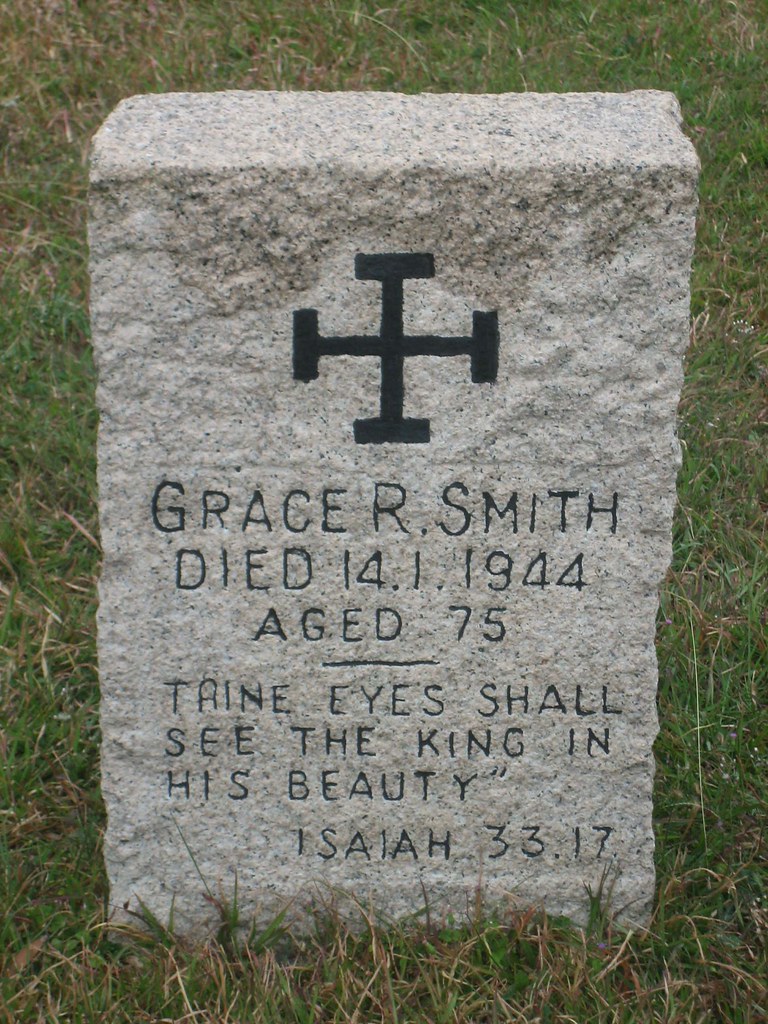
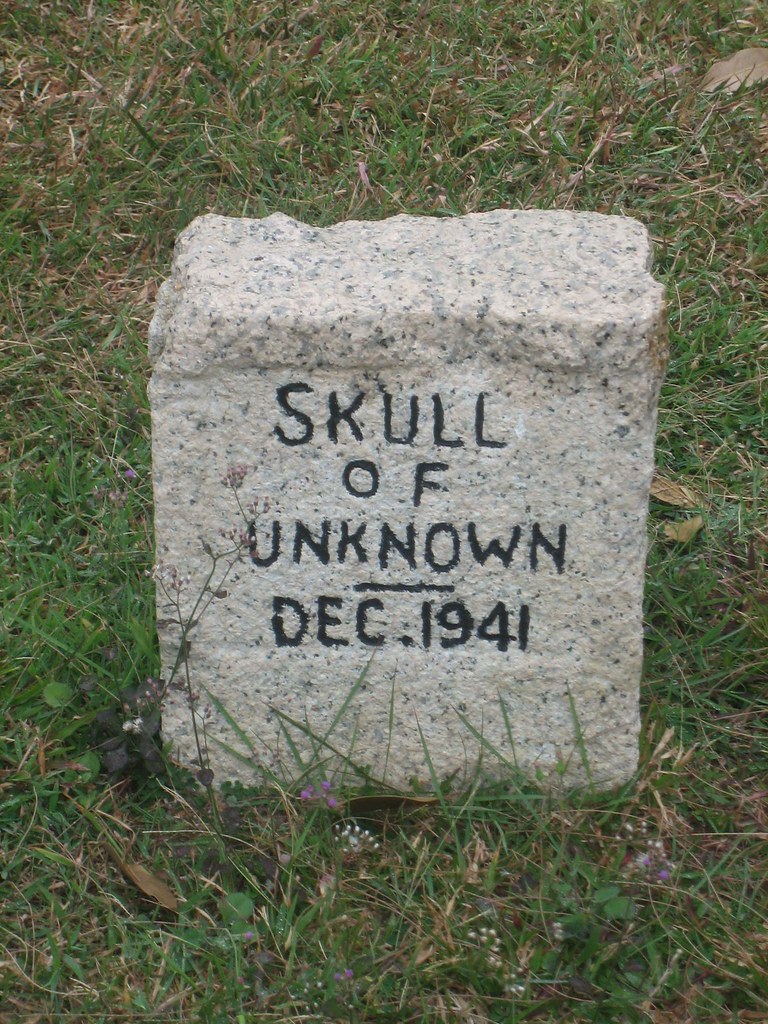
But if you ever have an extra day in Hong Kong, I would recommend that you go down to Stanley Village and hike out to the cemetery on the grounds of the old Stanley Internment Camp. Many of the gravestones were actually crafted by the prisoners in the camp, and those
 original tombs have been left as they were and preserved to this day. The area had been a cemetery much earlier in the life of the colony, but had been closed for 70 years by the time World War II started. So the cemetery also includes some much older tombstones from the middle of the 19th Century.
It as a rainy day, and I hadn't brought my umbrella. But fortunately, it was just a very light drizzle, so I was able to walk out to the old cemetery without getting too wet. I would have been disappointed by the weather, but I guess I felt that the cloudy day was strangely appropriate for visiting a cemetery. It is a very pretty area, with an excellent view of the
 bay, and was, in fact, used as a meeting place and park for internees at the camp throughout the years that they were interned by the Japanese.
After leaving the cemetery, I headed back toward Stanley, taking the path down to the beach to Main Street. Fortunately, since I had decided to go to the cemetery first, I ended up coming into Stanley from the "wrong" direction, so I found a little place for lunch beyond the main part of the town (if you were coming from the other direction) where they prices were a lot cheaper. Not quite Beijing prices, but pretty close, actually. The main part of Stanley, though is basically a tourist trap with lots of pricey bars. Not my kind of place. Pretty, I admit, but really tiring.
Labels: Hong Kong, Second Sino-Japanese War, World War II
