Links
- CV
- Titles
- Topics
- Tickets
- Science
- About Eric
- Book Reviews
- Country Profile
- Modern China
- Contact Eric
- Podcast
- Vision
- Sekai
- John
Archives
RSS

Reflections on a Wandering Life.....
Sunday, October 31, 2021
Hong Kong--Where to go from here?
In this video we see the flow of refugees from Communist China. I was born in 1954, and in the Cold War world I grew up in, we always heard how hard it was for people to leave the communist world. The Berlin Wall went up in 1961, and the purpose of that wall (and other walls separating Eastern and Western Europe) was to keep people in, not to keep people out. But in the earliest days of Communist rule both in Eastern Europe and in Asia, the restrictions to people leaving were not so severe. Remember, the communists assumed that the common people would absolutely love them. It took them awhile to realize that their people were less than enthralled with the system they were creating. Of course, Marxism as an economic system was a colossal failure. Between the end of World War II, and 1961 when the wall went up, something like 3 million people migrated from Eastern Europe to Western Europe. Do the math—it comes to about 500 people a day for fifteen years.
So in China, the same type of thing was happening. Not to the same degree, I’m sure, because Hong Kong had been devastated by the war, and did not present the economic contrast that was much more noticeable in Europe. Also, I was talking with another expat here in Kunming the other day who was in Hong Kong in 1960 or 61, and he said there were plenty of people going the other way, too. I think it eventually turned out to be a net gain (of refugees) for Hong Kong, but not as drastically as Eastern Europe.
Nevertheless, Hong Kong became the place of “safety” from “Communist” control. As 1997 drew near, there was concern that Hong was going to be just another city in China after the handover. [That concern was very evident to me, because I was a graduate student in Canada during those pre-1997 years. I used to go to the Chinese Alliance Church in Regina, where there were lots of people who had “escaped” from Hong Kong in anticipation of the handover.] Thus the intense negotiations between Margaret Thatcher and Deng Xiaoping. They each had an ace in the hole, so to speak. Deng Xiaoping’s ace in the hole was that the “New Territories,” that part of Hong Kong that was leased for 99 years by Great Britain in 1898 was due to be returned according to the terms of the lease. There was no way Britain could get out of it.
Margaret Thatcher’s ace in the hole was that the original Hong Kong, which comprised Hong Kong Island, was not leased. It had been ceded to Great Britain by treaty many years earlier. They did not have to return it. It would have made a mess of things if they had held on to it, and it would not have been worth much, because Hong Kong had grown to a size the dwarfed the original colony on the Island. So Margaret Thatcher did not actually want to keep it. But she was using that option to get the best deal possible. Basically, Deng Xiaoping made her an offer she could not refuse. He told her that China would allow Hong Kong to govern itself under the “one country, two systems” rubric for fifty more years. That was half the duration of the original lease.

So how has it been going? Depends on who you ask, of course, but there have been naysayers from the beginning. China executing the national security law and imposing it on Hong Kong was just the latest. But it seemed to sound the death nell for the one country, two systems arrangement in the minds of many observers.
Tuesday, December 31, 2019
A Brief Look Back and a Glance Forward

Last year on this date, I said the three most important issues of 2019 would be the South China Sea, the trade war, and human rights.
The South China Sea is still an issue, but it has really been on hold all year, so it is not an immediate issue.
The trade war definitely stayed up front all year. And they are talking about the first phase being ready to sign now, but I am skeptical. It does look like Trump is winning, although winning slowly, but this really needs to be a win-win situation. If one side loses, they both lose. But I guess it must be said that the trade war has not become the disaster some predicted and most feared.
Human rights is still very much an issue because of Xinjiang. There is some talk that the camps may be closing, but I am not confident. But the BBC sattelite photos put a lot of pressure on the Chinese government. Their initial denials became ludicrous and they were forced to develop other rationalizations.
The one I missed, of course, was Hong Kong. Nobody anticipated it. If they had, they never would have introduced that extradition bill. I personally do not see the introduction of the extradition bill as a malicious act. But it was definitely clueless, and points to the perpetual insensitivity of the Hong Kong government.
For those of you who don't follow Hong Kong politics, the Chief Executive in Hong Kong is sorta elected, but in a lopsided way that basically ensures that Beijing is in control. The people who get picked for the job are not Communists per se. But they tend to be pro-Beijing elitists. So far, not one of them has left office without being roundly condemned by the common people. It is not a good situation and not entirely fair either to the common people of Hong Kong, or to the Chief Executive. What I mean is that most of the time, the Chief Executive is actually not a bad administrator. But the ones who get chosen are often viewed as "out of touch." For example, when C.Y. Leung was C.E., he remarked at one time that if democracy were more direct, there would be people voting who only made 1000 (Hong Kong) dollars a month. In other words, he was concerned that minimum wage people would actually have a part in choosing the chief executive. It's the sort of thing that makes you say, "That's what democracy is about, C.Y." I really don't think he meant it maliciously. But it was a stupid thing to say.
But what happened last summer really was the ultimate faux pas for a Hong Kong leader. How Carrie Lamb could have thought people would accept an agreement to extradite Hong Kong citizens to mainland China just boggles the mind. Pandemonium. As I have said before, I do not justify the violence of the young people. But she lit the fuse. And it's not over. That could slowly get better or get much worse. And the involvement of ignorant uninformed American members of Congress does not help.
So I thought I would let you hear from a unique group of young people. Four Hong Kong students at Columbia University share their thoughts. They are not ignoramuses like American members of Congress, but they are also not as one-sided as the demonstrators who have lived all their lives in Hong Kong and tend to be very self-centered in their thinking.
This will be the defining issue at least in the first part of the year. But the trade war is also ongoing because it is not finishing up quickly the way Trump anticipated. I think the South China Sea is probably going to stay in the background for the foreseeable future. Regarding Xinjiang, if China gets those camps closed down very quickly, they may survive this, because most people realize that there were, in fact, jihad Muslims in Xinjiang and something had to be done. But the actions of the government have been way, way too heavy-handed, so it really needs to end now, because the situation is precarious in terms of China's reputation before the watching world. It is not fun to live a world where everybody hates you and your own best citizens are embarrassed to admit that they are from China.
Labels: Hong Kong
Wednesday, December 04, 2019
Peaceful Protests?
In #HongKong the cause for freedom has never been greater. The escalating tensions & violence we've seen from the police force in response to peaceful protests is shameful. The truth will not be silenced. I support those speaking out against tyranny & fighting for freedom. pic.twitter.com/qaiEl05lPp
& mdash; Senator Ted Cruz (@SenTedCruz) November 16, 2019
Senator Ted Cruz
404 Russell Senate Office Building
Washington DC 20510
Dear Senator Cruz,
Digging up bricks from the street, destroying punblic property is peaceful?
Spray painting public art pieces is peaceful?
Desecrating national heritage sites is peaceful?
Verbal abuse of police by demonstrators is peaceful?
Throwing bricks at police officers is peaceful?
Throwing Molotov cocktails at police is peaceful?
Starting fires and shooting arrows at police is peaceful?
Vandalizing the Legislative Council (the congress of Hong Kong) after the bill they were protesting had already been suspended is peaceful?
Joshua Wong the next day tweeting "I'm proud of what they did last night" is peaceful?
Vandalizing places of business is peaceful?
Throwing petrol on someone and setting him on fire because he disagrees with what the the protesters are doing is peaceful?
Beating up an unarmed man because they suspect him of agreeing with China is peaceful?
Setting up barricades to disrupt the lives of Hong Kong people and then beating a good citizen senseless when he tries to remove them is peaceful?
Senator, do your homework. Better yet, just stay out of it. With all due respect, Sir, your remarks look and sound ridiculous to someone who knows what's actually going on in Hong Kong.
Sincerely,
Eric Langager
Editor
Beijing Diary
Labels: Hong Kong
Wednesday, August 14, 2019
Good Guys vs. Bad Guys
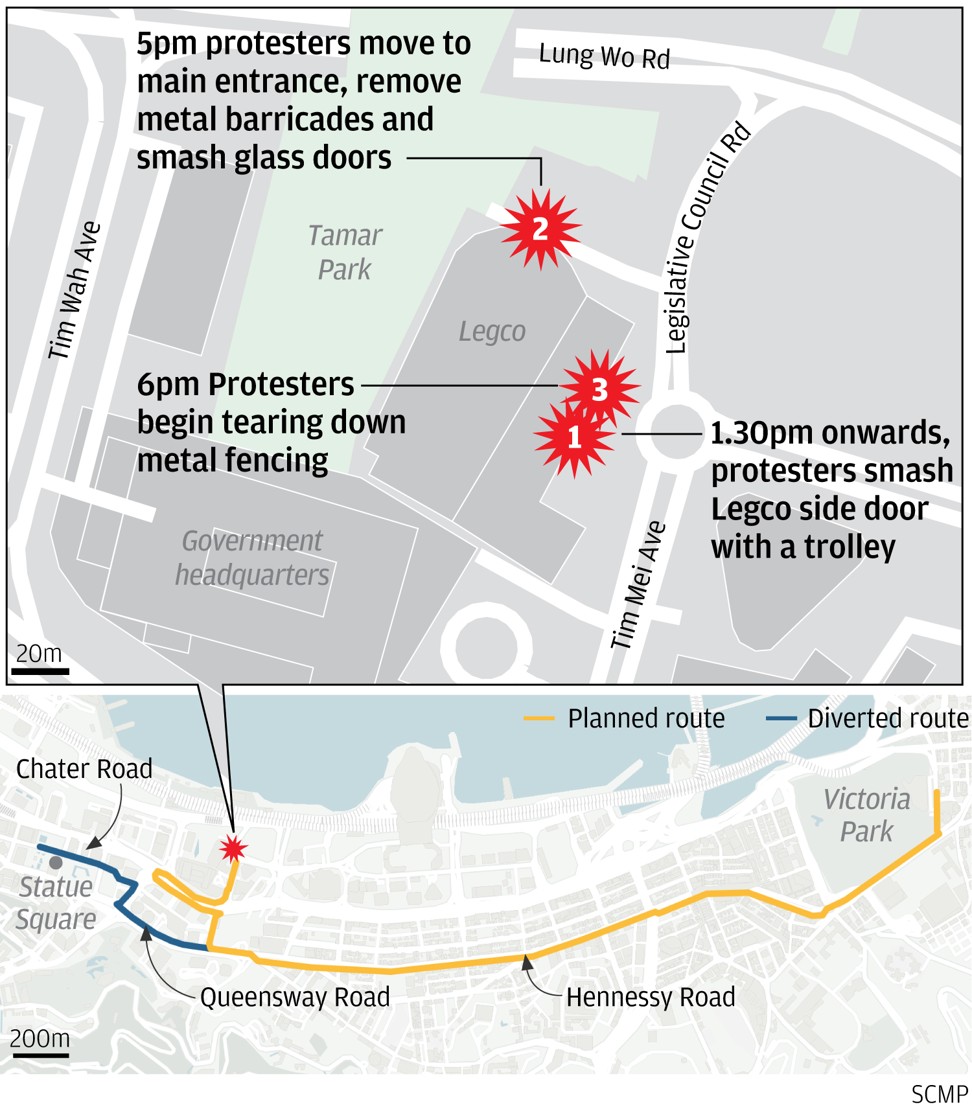
Storming of the Legislative Council on July 2nd
This video (below) is a very good overview of what has been going on this summer in Hong Kong. If you are unclear about the history of this problem, you might want to listen to the podcast I did in June which explains the events that have led up to the current crisis.
But if you are basically familiar with the history, you can probably forego that. So let me just outline some of the key issues that seem to define this conflict this summer.
One thing I have mentioned as a frustration for me personally is the level of contempt for the police on the part of these privileged (read spoiled) young people. Now, if there is police brutality, that is an issue. For example, in 2014 there was actually a video of police beating a guy after he had been handcuffed. Clearly that is abuse. But in the current demonstrations, I have seen headlines like "Police use tear gas on crowds." This sort of thing baffles me. When crowds are becoming unruly, tear gas is certainly better than shooting real bullets. It clears the area. So a headline like "Police use tear gas" is essentially the same as "Police act appropriately and with compassion toward demonstrators." Can tear gas ever be used inappropriately? Sure. But you have to show that. A headline like "Police use tear gas on crowds" is bewildering, because it does not indicate anything inappropriate.
Rubber bullets are a little stronger. A rubber bullet can blind you if you get hit in the eye. But rubber bullets are certainly appropriate if crowds are charging the police. I saw protesters throwing umbrellas at the police. I did not personally see them throwing bricks, but I did hear about some of that, and I did see protesters digging up bricks from the street. Rubber bullets are very important when you have that level of aggressiveness. So when I hear that rubber bullets are being used, I look to see if there has been any agressiveness on the part of the demonstrators that justifies this. Throwing any kind of projectile at police is an open invitation for them to use rubber bullets, and I would fully support the use of rubber bullets in such a situation.
Basically, I see a divide in the current situation. Before June 15th, the demonstrations were mostly peaceful and very impressive. On July 15th, the bill was suspended, which meant it was basically dead. At that point, the demonstrators should have declared victory and gone home. But they didn't. They had a huge march the next day (June 16th). Even that did not bother me, because it was peaceful. I just think it should have been a victory celebration. But the demonstrators were not satisfied to have the bill dead. They had further demands. They wanted the chief executive to resign, and they wanted the bill to be officially withdrawn. They also wanted all arrests of demonstrators to be nullified.
They were being completely unreasonable. The purpose of demonstrations is to communicate the feelings of the people to the government, not to replace the government. But the demonstrators essentially wanted the powers that be to relinquish their positions of authority and allow the demonstrators to run Hong Kong. They became aggressive and violent. On July 2nd, they stormed and vandalized the legislative counsel. That's when I completely lost sympathy for them. As Margaret Thatcher said back in 1981. when and IRA terrorist Bobby Sands went on a hunger strike in an attempt to be given political prisoner status, "Crime is crime is crime." You see, Bobby Sands was not a political prisoner. He was not arrested merely for stating his political views. I guess you could call a bomb a type of statement, but it is also an instrument of terror. By the same token, vandalizing the Legislative Counsel could be considered a type of statement. But it is also a crime. Such destruction of property cannot be tolerated in civil society. Bobby Sands was demanding things that might have been considered appropriate for someone who was imprisoned merely for his political views, but not appropriate for someone who blows things up.
Many years ago, I worked in the prison system in Oregon. Every prisoner has a way to figure out how his particular crime was somehow justified, or not that bad. If we let criminals decide which punishment is appropriate for them, there will be nothing left of society.
As I said in my podcast, I fully sympathize with concerns about the extradition bill. But the young people have become the bad guys. Why do I say this? Let's take a look. Which of the following activities are things good guys do and which are things bad guys do?
- Carrying protest signs.
- Chanting protest slogans in unison.
- Marching together with other throngs of protestors.
- Scaling fences and tearing down barricades.
- Breaking and entering.
- Spray painting graffiti on the walls of the Legilative chamber.
- Throwing umbrellas, bricks, water bottles, metal balls or liquid drain cleaner at cops.
- Blocking roads and shutting down traffic so that people can't go to work.
- Tying up a journalist and tormenting him.
- Fighting with police and taking their batons away.
- Shutting down the airport so that all flights are cancelled.
- Charging the police en masse so that they have to draw their firearms.
- Demanding that they (the demonstrators, not the people via democratic elections) be allowed to unseat elected officials.
- Demanding that they and they alone be exempt from punishment for breaking the law.
- Proclaiming their belief in the rule of law while they are systematically breaking it.
One positive note: The summer is almost over. I predict that when the new semester starts, many of these privileged young people will go back to school and the protests will slowly dissipate. We'll see.
Labels: Hong Kong
Thursday, June 20, 2019
Hong Kong Explained

Demonstrators in Hong Kong protesting the extradition bill,
which has now been suspended.
Over the past days there have been extraordinary demonstrations in Hong Kong. In this podcast episode, I explain the demonstrations and some of the history behind them.
Here are some links for statements I referred to in this episode:
https://mobile.twitter.com/bopinion/status/1140459638594215936
Nisha Gopalan's explanation of the difference between the Occupy
Central demonstrations in 2014 and the current demonstrations.
https://twitter.com/foreignoffice/status/1139192317812903936
Statement by the British Foreign Office on the Joint Declaration.
Here are some resources that might be of use to you in studying this issue:
News Sources:
http://news.rthk.hk/rthk/en/news-programmes/this-episode.htm?cmsid=78
Newswrap on RTHK. This is a nightly radio news program discussing the
events of the day. Very useful in understanding day to day events in
Hong Kong.
https://www.youtube.com/playlist?list=PLuwJy35eAVaIZpCKUpS00uriIRNCUdUHg
The Pulse. Public affairs television from Hong Kong, with Steve Vines
Twitter Accounts to Follow
https://twitter.com/VivienneChow
Vivienne Chow. Some time ago I was doing some research on the flag
issue and I came across an article of hers that was really quite well
written. Also, she is not a politician, so she writes about other stuff.
Highly recommended if you want to keep tabs with what is going on in the
SAR.
https://twitter.com/hkchrislau
Chris Lau. Reporter for SCMP (South China Morning Post). I'm sure I
would not agree with everything he writes, but I do like his twitter posts.
Following him is a little like following Brit Hume--he points me to
informative articles, which saves me a lot of time looking them up myself.
https://twitter.com/joshuawongcf
Joshua Wong, one of the student leaders of the Occupy Central
movement. You have to admire this guy--he does seem sincere, but
sometimes his attitude toward the police annoys me. Also, I wish some
of these student leaders would spend some of their energy trying to
reach out to China--not kissing up to them, but openly and honestly
stating what kinds of changes would help to improve relationship.
Labels: Hong Kong, Magna Carta, Police
Thursday, November 04, 2010
The Battle of Hong Kong
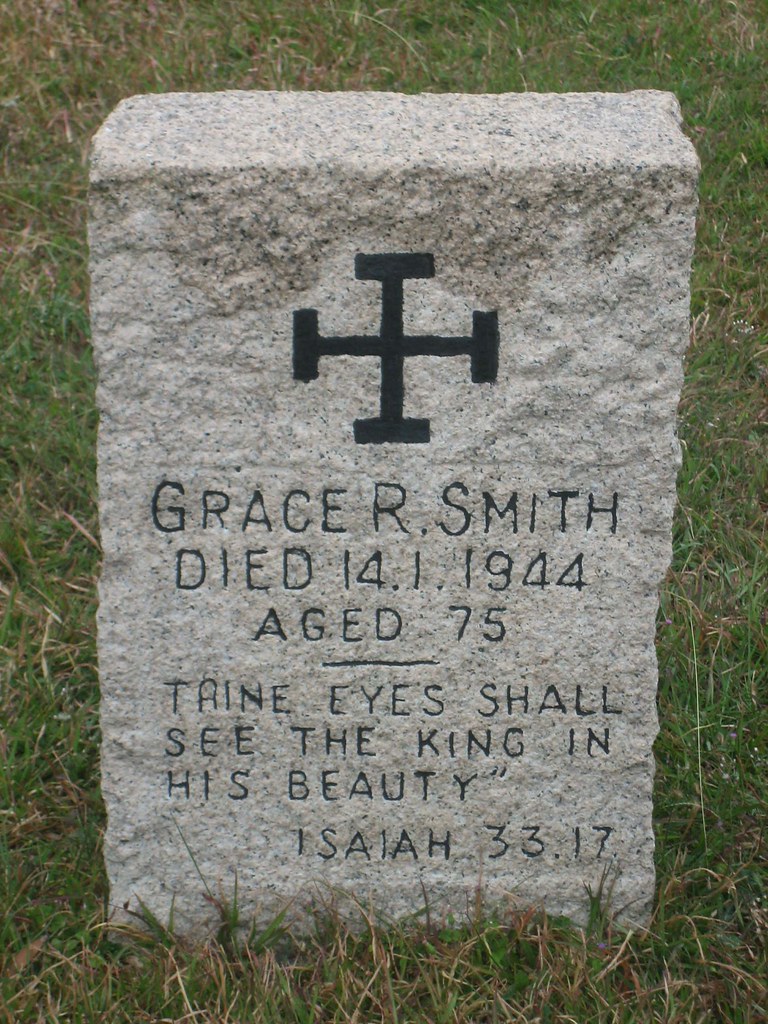 After the bombing of Pearl Harbor, the Japanese proceeded to take the Pacific. One of the first places to be attacked after Pearl Harbor (actually the next day) was Hong Kong. I won't go into all the details, because the plaque at the cemetery gave a pretty good rundown of the battle, so I took a picture of it for your convenience.
In my opinion, the main difference between Pearl Harbor and the Battle of Hong Kong is that Pearl Harbor was a surprise attack against a very well defended location, whereas the Battle of Hong Kong was an expected attack (since Japan had invaded the mainland some years earlier) against a very weakly defended community. In my opinion, there should have been an Allied
 decision to give strategic assistance to Hong Kong, since the Allies had to know the Japanese were going to attack it sooner or later. Remember, they took Shanghai in 1937. So you could argue that Hong Kong had eight years warning.
 The problem was Europe. The Americans were fighting a war on two fronts, and Europe was a much higher priority. But Hong Kong was not by any means the only place that had to take a back seat to Europe. The leader of the Philippines was quite bitter about Roosevelt's refusal to render adequate aid to prevent a Japanese takeover. Basically, Roosevelt's strategy was to pull MacArthur out (he had to trick him into leaving), let the Japanese take it temporarily, and
 then fight the Japanese off once the war in Europe had been one. It was a tragic betrayal--one that almost killed Uncle Otto, because he was involved in taking back the Philippines. But that was Roosevelt's decision. I don't know if Manuel Quezon (Philippine president at the time) ever forgave Roosevelt for that prioritization, because it meant terrible suffering for the Philippine people under Japanese occupation.
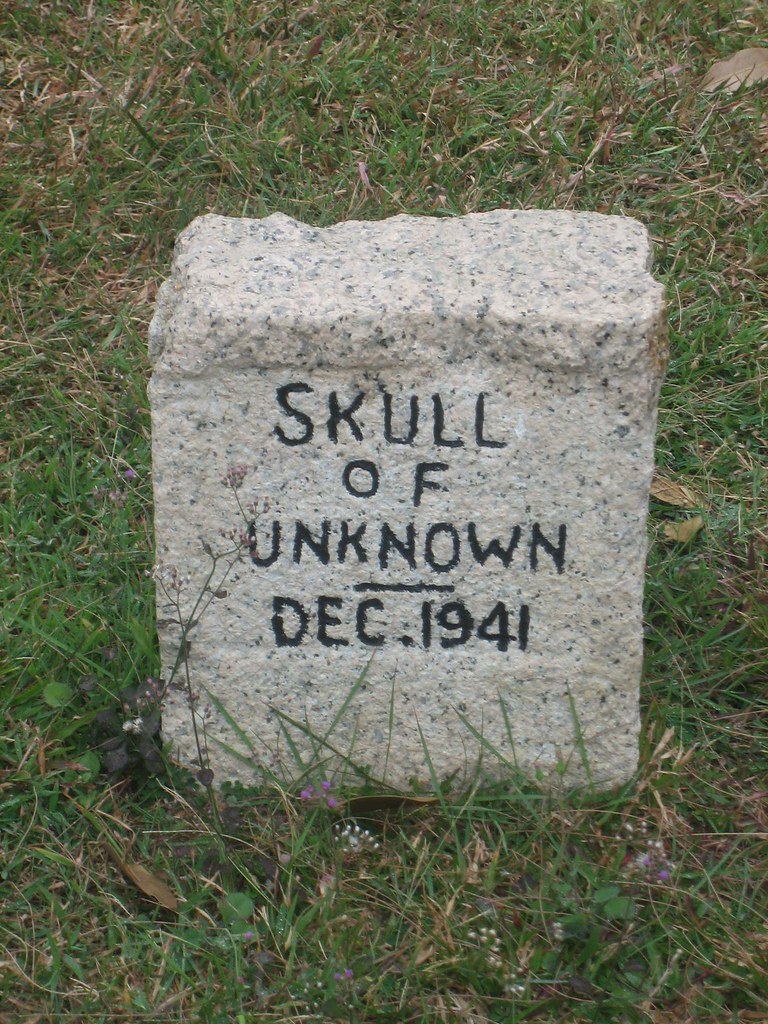
 But if you ever have an extra day in Hong Kong, I would recommend that you go down to Stanley Village and hike out to the cemetery on the grounds of the old Stanley Internment Camp. Many of the gravestones were actually crafted by the prisoners in the camp, and those
 original tombs have been left as they were and preserved to this day. The area had been a cemetery much earlier in the life of the colony, but had been closed for 70 years by the time World War II started. So the cemetery also includes some much older tombstones from the middle of the 19th Century.
 It as a rainy day, and I hadn't brought my umbrella. But fortunately, it was just a very light drizzle, so I was able to walk out to the old cemetery without getting too wet. I would have been disappointed by the weather, but I guess I felt that the cloudy day was strangely appropriate for visiting a cemetery. It is a very pretty area, with an excellent view of the
 bay, and was, in fact, used as a meeting place and park for internees at the camp throughout the years that they were interned by the Japanese.
 After leaving the cemetery, I headed back toward Stanley, taking the path down to the beach to Main Street. Fortunately, since I had decided to go to the cemetery first, I ended up coming into Stanley from the "wrong" direction, so I found a little place for lunch beyond the main part of the town (if you were coming from the other direction) where they prices were a lot cheaper. Not quite Beijing prices, but pretty close, actually. The main part of Stanley, though is basically a tourist trap with lots of pricey bars. Not my kind of place. Pretty, I admit, but really tiring.
Labels: Hong Kong, Second Sino-Japanese War, World War II
Sunday, February 17, 2008
What is Hong Kong?
First is Great Britain. Hong Kong has a uniquely British heritage. There is much in Hong Kong that is clearly influenced by British life and culture. Downtown Hong Kong really reminds me of London. That's not just a subjective value judgment, either. Couldn't be--I've never been to London. Seriously, it all really does feel very British, if you know what I mean. But Hong Kong's connection with Great Britain is much more than that. The Basic Law by which Hong Kong is governed is an offspring of the treaty between Great Britain and China, negotiated by Margaret Thatcher and Deng Xiaoping before the handover in 1997, to which Great Britain was a signatory. To watch news items about the development of Hong Kong since 1997, one would think that the whole issue comes down to what Beijing decides, and Beijing is, in fact, quite sensitive on this point, stating repeatedly that the Basic Law is domestic, and draws its authority from the People's Government. But we must remember that before the handover, Hong Kong people were British subjects, and the UK has a direct treaty interest in making sure that terms of that treaty (the Joint Declaration) are followed, and the interests of those former subjects are protected. So the conditions specified in the Basic Law are based on the provisions in the Joint Declaration, and it is at least true that the UK would have reason and cause to object if any provision in the Basic Law, or interpretation of any provision were deemed by Great Britain to be in violation of that declaration.
The second country is the United States. Economically, Hong Kong is a very American city. The Hong Kong dollar is pegged to the US dollar, which means that Hong Kong is essentially an extension of Wall Street, and that Hong Kong's monetary policy is outsourced to the Federal Reserve. Up until 2005, China's currency was pegged to the dollar, too, but that's different, because the RMB is not convertible. In Hong Kong, there has even been suggestion that Hong Kong dispense with local currency altogether, and just use US dollars. I don't think that will actually happen, and I would not recommend it personally (because it would essentially freeze the dollar peg), but it is an indication how closely Hong Kong is tied to the United States, at least in terms of economics. Can you imagine the People's Republic abandoning their currency and using US dollars?
The third country, of course, is China. Hong Kong is technically part of China now, although there are restrictions on how much influence and/or control China is able to exercise in one area of life or another. In practical terms, the effect of the agreement between Great Britain and the PRC that set the stage for the handover in 1997 is to essentially postpone the handover for another 50 years (39 years from now). Technically, that means that after the 50 years is over, Hong Kong could become just another Chinese city. But 39 years is a long time. Try to remember what China was like 39 years ago. It was 1969, and China was in the throes of the Cultural Revolution. The difference between China today and China back then is much greater than the difference between China today and Hong Kong today. Anything can happen in 39 years. So how will Hong Kong change in the years to come, in anticipation of eventually being "swallowed up" by China? Some have suggested that the Hong Kong dollar should be pegged to the RMB instead of the US dollar, but that is not possible as long as the RMB is not convertible. There is more and more talk about that now, given the decline of the dollar, but the US is Hong Kong's second largest trading partner (after the PRC) so that decline does not hurt Hong Kong that much in practical terms. When it comes right down to it, the question we need to be asking is not how Hong Kong will change, but how China will change, and how those changes will affect the relationship between Hong Kong and the mainland.
Labels: Basic Law, Hong Kong, Joint Declaration
