Links
- CV
- Titles
- Topics
- Tickets
- Science
- About Eric
- Book Reviews
- Country Profile
- Modern China
- Contact Eric
- Podcast
- Vision
- Sekai
- John
Archives
RSS

Reflections on a Wandering Life.....
Tuesday, November 23, 2010
Winter Heat
Interesting debate in the China Daily on the heating system in China. I think I have probably mentioned this issue a few times before, but in North China, hot water heat is standard in most family dwellings. In South China that is not the case.
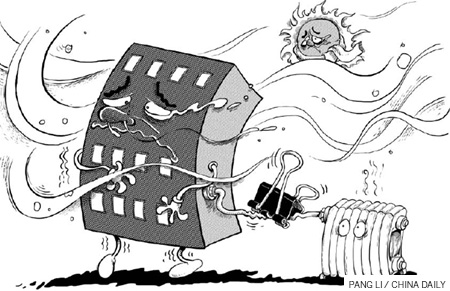 So in the winter, North China is actually much more livable, in my opinion. I visited some folks in Wuhan a few years ago, and their home had no heat. They wore parkas outside, and the same parkas inside. Their inside and outside dress was the same. Being outside with a parka is very, very different from having to live inside with a parka. When I am outside, I am always moving--walking, riding my bike, or climbing the mountain. But inside, I am sitting at my desk or something, and then I really want it to be cozy. Can't do that in South China. I will admit that it is not as cold outside in the south. But it is much colder inside. Miserable. Anyway, read the debate (actually a discussion between two people who took basically the same position). I think you will find it interesting.
In America, inside winter heat varies widely from fire places to furnaces, but the majority of systems have traditionally been some form of forced air heat. In China, hot water radiators are the standard. Hot water radiators went out of use in the U.S. because the temperature is not as easy to regulate. You can turn the water up or down, but there is no thermostat. Americans are used to being able to enter a room and set an exact temperature. Personally, I much prefer radiant heat. Much easier on my allergies. My room is not hot--I generally wear a sweatshirt. But it's comfortable.
So in the winter, North China is actually much more livable, in my opinion. I visited some folks in Wuhan a few years ago, and their home had no heat. They wore parkas outside, and the same parkas inside. Their inside and outside dress was the same. Being outside with a parka is very, very different from having to live inside with a parka. When I am outside, I am always moving--walking, riding my bike, or climbing the mountain. But inside, I am sitting at my desk or something, and then I really want it to be cozy. Can't do that in South China. I will admit that it is not as cold outside in the south. But it is much colder inside. Miserable. Anyway, read the debate (actually a discussion between two people who took basically the same position). I think you will find it interesting. In America, inside winter heat varies widely from fire places to furnaces, but the majority of systems have traditionally been some form of forced air heat. In China, hot water radiators are the standard. Hot water radiators went out of use in the U.S. because the temperature is not as easy to regulate. You can turn the water up or down, but there is no thermostat. Americans are used to being able to enter a room and set an exact temperature. Personally, I much prefer radiant heat. Much easier on my allergies. My room is not hot--I generally wear a sweatshirt. But it's comfortable.
Saturday, November 20, 2010
My fingers are flying these days. A new keyboard was willed to me by a dead laptop. Eason's machine fell off his desk some time ago. That was the end of it, but he salvaged some of the parts. He gave me the battery and keyboard, because I have the same model. My battery is still in good shape, even after five years, because I am much more careful about it this time. With my old Toshiba, I would shut down my laptop, and then unplug it and start putting it away while it was powering down. And when I took it out at a new location, I would turn it on and let it start powering up while I was getting it set up and plugged in. Needless to say, the battery burned out after a couple years. With my present computer, I always make sure it is completely powered down before I unplug it, and I never turn it on until I am sure it has power. So the only time my battery ever gets used is if I have a power failure in my apartment while I am working on it, or if I take it out at a coffee bar and realize that I have forgotten to bring the cord with me. Bottom line, I live as if I don't have a battery, so when I need it, it is always there.
My keyboard was quite another matter. You know how it is when you get a crumb lodged under a key, and find that the key will not depress properly. You start by trying to blow out the crumb. If that works, fine. But if not, then you have to take the key off and remove the crumb. I have done this several times, usually without incident. But once in awhile, something breaks when I am taking the key off, so I cannot quite get it back on properly. So I had a couple keys that really didn't work very well. I was constantly having to type over those letters several times, which always slowed my typing speed down considerably. Eason's keyboard was in mint condition. Don't know how long this one will last, but it sure is nice for now.
My keyboard was quite another matter. You know how it is when you get a crumb lodged under a key, and find that the key will not depress properly. You start by trying to blow out the crumb. If that works, fine. But if not, then you have to take the key off and remove the crumb. I have done this several times, usually without incident. But once in awhile, something breaks when I am taking the key off, so I cannot quite get it back on properly. So I had a couple keys that really didn't work very well. I was constantly having to type over those letters several times, which always slowed my typing speed down considerably. Eason's keyboard was in mint condition. Don't know how long this one will last, but it sure is nice for now.
Tuesday, November 16, 2010
Cell Phone Dictionary
I was sitting in Lush today with my laptop, when a friendly American kid showed me a website where you can download dictionaries for cell phones. The Chinese English dictionary is a tidy 10 MB application. I suppose if you don't have the Chinese fonts on your phone already you might have to set that up, but if you live in China like me and have a Chinese cell phone, that stuff is already going to be in place. It's really handy for me, because the little electronic dictionary I bought four years ago is pretty much worn out after getting so much use last year during the nine months that I was in language school every day. An electronic dictionary for a Chinese person learning English is a much simpler device. All they need is a keyboard. But if you are learning Chinese, you need to have a screen where you can write the Chinese characters with a stylus. My Nokia has all that--I can write text messages in Chinese--just didn't have the dictionary part. It hasn't stopped me, of course--I use the radical chart in my Xinhua dictionary just like I did when I first started studying Chinese. But it sure it handy to be able to grab my cell phone and write a character on it to get the pinyin and a short definition.
Thursday, November 11, 2010
Streams in the Desert
 Getting caught up on Streams in the Desert. Streams in the Desert is a devotional book written by Mrs. Charles E. Cowman, who was a missionary (along with her husband) to China and Japan in the early part of the 20th century. Perhaps this book would not be of as much interest to you if you don't come from the China-Japan theater of world mission. I think you might still find it encouraging, though. Here's Tuesday's meditation:
"They that dwell under his shadow shall return; they shall revive as the corn and grow as the vine" (Hosea 14:7).
The day closed with heavy showers. The plants in my garden were beaten down before the pelting storm, and I saw one flower that I had admired for its beauty and loved for its fragrance exposed to the pitiless storm. The flower fell, shut up its petals, dropped its head; and I saw that all its glory was gone. "I must wait till next year," I said, "before I see that beautiful thing again."
That night passed, and morning came; the sun shone again, and the morning brought strength to the flower. The light looked at it, and the flower looked at the light. There was contact and communion, and power passed into the flower. It held up its head, opened its petals, regained its glory, and seemed fairer than before. I wonder how it took place--this feeble thing coming into contact with the strong thing, and gaining strength!
I cannot tell how it is that I should be able to receive into my being a power to do and to bear by communion with God, but I know It is a fact.
Are you in peril through some crushing, heavy trial? Seek this communion with Christ, and you will receive strength and be able to conquer. "I will strengthen thee." -- Charles Haddon Spurgeon
Yesterday's Grief
By Katharine Lee Bates
The rain that fell a-yesterday is ruby on the roses,
Silver on the poplar-leaf, and gold on willow stem;
The grief that chanced a-yesterday is silence that incloses
Holy loves where time and change shall never trouble them.
The rain that fell a-yesterday makes all the hillside glisten,
Coral on the laurel and beryl on the grass;
The grief that chanced a-yesterday has taught the soul to listen
For whispers of eternity in all the winds that pass.
O faint-of-heart, storm-beaten, this rain will gleam to-morrow,
Flame within the columbine and jewels on the thorn,
Heaven in the forget-me-not; though sorrow now be sorrow,
Yet sorrow shall be beauty in the magic of the morn.
Wednesday, November 10, 2010
Home again
Got back from Shenzhen yesterday. I spent some time catching up on the McLaughlin Group. It's kinda funny, you know...McLaughlin Group is not blocked in Hong Kong. That would be the place to get caught up. But I was so busy, I only had time to watch one episode. So I watched two back to back yesterday. Glad the political season in the US is over. At one point, McLaughlin asked the panel to comment on whether too much money is spent on political campaigns. Here's part of the interchange:
MCLAUGHLIN: Exit question: Political spending this year is estimated to top $3 billion, a new record. Is this sum of money, A, too much; B, about right; C, too little; D, misspent?
BUCHANAN: We spend more on dog food, John, than we do on politics. What are you talking about?
ELEANOR: The dogs deserve it. The politicians don't.
I think the world of Buchanan, but this is one time I will have to agree with Eleanor.
When I was coming back to my apartment this evening, I noticed they had fired up the boiler. That's good news. Last night was my first night back from the south, and it was really cold. I stayed warm under the hand made quilt that I bought years ago from a lady in a mountain village in Shanxi Province. But it was sure nice to see that the hot water has started flowing for the winter.
MCLAUGHLIN: Exit question: Political spending this year is estimated to top $3 billion, a new record. Is this sum of money, A, too much; B, about right; C, too little; D, misspent?
BUCHANAN: We spend more on dog food, John, than we do on politics. What are you talking about?
ELEANOR: The dogs deserve it. The politicians don't.
I think the world of Buchanan, but this is one time I will have to agree with Eleanor.
When I was coming back to my apartment this evening, I noticed they had fired up the boiler. That's good news. Last night was my first night back from the south, and it was really cold. I stayed warm under the hand made quilt that I bought years ago from a lady in a mountain village in Shanxi Province. But it was sure nice to see that the hot water has started flowing for the winter.
Sunday, November 07, 2010
Shenzhen
This is the third time I have stopped in Shenzhen to visit Linda. The first time I stayed in the dormitory at her company. Last time I stayed with Linda and her brother at their place. But she lives at a factory in a remote area now, and her brother is no longer here. Fortunately, there is a youth hostel in Shenzhen now. Pretty nice place. My roommate is a young engineer from Bangladesh. He told me there are three types of schools in Bangladesh, the Bengali schools (which would be the regular public schools), the Christian schools, and the Islamic schools, which teach Sharia Law.
As a moderate Muslim, he had nothing but disdain for the Islamic schools which imposed Sharia Law (much as an ordinary American Protestant wouldn't have much time for the Ku Klux Klan), and he said the Bengali schools were not very good quality. But he also said the Christian schools like the one he went to were a little too expensive for the average person.
I was in High School when East Pakistan became Bangladesh, and West Pakistan became Pakistan. It actually goes back to the days right after the independence (of India from Great Britain) when the Muslim areas (East and West Pakistan) were separated from the larger Hindu part of India. That's how independence always seems to work. As India, they wanted independence from Britain. But as Muslims, they wanted independence from India. And finally, as Bengalis, they wanted Independence from Pakistan.
But she lives at a factory in a remote area now, and her brother is no longer here. Fortunately, there is a youth hostel in Shenzhen now. Pretty nice place. My roommate is a young engineer from Bangladesh. He told me there are three types of schools in Bangladesh, the Bengali schools (which would be the regular public schools), the Christian schools, and the Islamic schools, which teach Sharia Law. As a moderate Muslim, he had nothing but disdain for the Islamic schools which imposed Sharia Law (much as an ordinary American Protestant wouldn't have much time for the Ku Klux Klan), and he said the Bengali schools were not very good quality. But he also said the Christian schools like the one he went to were a little too expensive for the average person.
I was in High School when East Pakistan became Bangladesh, and West Pakistan became Pakistan. It actually goes back to the days right after the independence (of India from Great Britain) when the Muslim areas (East and West Pakistan) were separated from the larger Hindu part of India. That's how independence always seems to work. As India, they wanted independence from Britain. But as Muslims, they wanted independence from India. And finally, as Bengalis, they wanted Independence from Pakistan.
Saturday, November 06, 2010
Trains in China
Yesterday afternoon after crossing the border into Shenzhen from Hong Kong, I went to the Shenzhen train station, which is located conveniently right north of the border. I told them I wanted a hard sleeper ticket to Beijing.
That's pretty much what I have come to. When I first started to ride trains in China, which is about 50 train rides ago, I had a strong preference for the soft sleeper. Hard sleepers are a bit more crowded and not always very clean. But a few things have happened since then to change my mind. One is that the soft sleepers are getting smaller. On the newer trains, they seem to be compromising storage space to make the ceiling lower. The train I took from Beijing to Shanghai this time was brand new. But there was no overhead storage rack. Fortunately I was able to squeeze my backpack under one of the beds with the help of another passenger. But that's really not a good thing to do. The floors on these trains can be quite dirty. Less so in the soft sleeper, but certainly not as clean as an overhead rack.
Another change is that the soft sleeper tickets are getting more expensive. The price for soft sleeper tickets seems to be going up faster than hard sleeper tickets, which naturally means that the price differential between the two is greater than before. I have found that if you get a hard sleeper bottom bunk, the difference between hard and soft sleeper is not that great. But the price is. But what really helps put the matter in perspective is taking a trip with no bed at all. I will never forget the 13 hour train ride I took to Shanxi Province with Jean and Claire in the fall of 2004.
We bought 2 tickets for four people, and I spent most of the time sitting on the floor hunched over trying to catch a few winks of sleep. Toward the morning hours, some seats opened up, and Jean and Claire, who had been sleeping, took seats and let Lucy and I use the bunks. After a night like that, you really begin to believe that any kind of bed is better than no bed. As if that experience wasn't enough, two years later, in the fall of 2006, I was pick-pocketed in Suzhou, and had to buy a no-seat ticket to get back to Beijing. Twenty hours.
So the bottom line is, if you are riding the trains in China, any kind of sleeper is better than nothing. Even if you get stuck with a top bunk where you can't sit up, you always know that when you get really tired, there is a rack reserved for you to stretch out on. If you ever have to ride rough in the countryside of China, you will come to really appreciate that. It's a luxury, believe me.
That's pretty much what I have come to. When I first started to ride trains in China, which is about 50 train rides ago, I had a strong preference for the soft sleeper. Hard sleepers are a bit more crowded and not always very clean. But a few things have happened since then to change my mind. One is that the soft sleepers are getting smaller. On the newer trains, they seem to be compromising storage space to make the ceiling lower. The train I took from Beijing to Shanghai this time was brand new. But there was no overhead storage rack. Fortunately I was able to squeeze my backpack under one of the beds with the help of another passenger. But that's really not a good thing to do. The floors on these trains can be quite dirty. Less so in the soft sleeper, but certainly not as clean as an overhead rack.
Another change is that the soft sleeper tickets are getting more expensive. The price for soft sleeper tickets seems to be going up faster than hard sleeper tickets, which naturally means that the price differential between the two is greater than before. I have found that if you get a hard sleeper bottom bunk, the difference between hard and soft sleeper is not that great. But the price is. But what really helps put the matter in perspective is taking a trip with no bed at all. I will never forget the 13 hour train ride I took to Shanxi Province with Jean and Claire in the fall of 2004.
We bought 2 tickets for four people, and I spent most of the time sitting on the floor hunched over trying to catch a few winks of sleep. Toward the morning hours, some seats opened up, and Jean and Claire, who had been sleeping, took seats and let Lucy and I use the bunks. After a night like that, you really begin to believe that any kind of bed is better than no bed. As if that experience wasn't enough, two years later, in the fall of 2006, I was pick-pocketed in Suzhou, and had to buy a no-seat ticket to get back to Beijing. Twenty hours.
So the bottom line is, if you are riding the trains in China, any kind of sleeper is better than nothing. Even if you get stuck with a top bunk where you can't sit up, you always know that when you get really tired, there is a rack reserved for you to stretch out on. If you ever have to ride rough in the countryside of China, you will come to really appreciate that. It's a luxury, believe me.
Friday, November 05, 2010
Leaving Hong Kong
This morning I packed my bags and prepared to leave the youth hostel. As we were checking out and getting ready to board the shuttle for the trip into Sheung Wan, a Russian guy showed up. He had been out all night drinking with his buddy, and had taken a taxi or something to get back to the hostel (because no shuttles run at night). Problem was, he had misplaced his friend. I told him that his friend could probably find his way back, but he told me that his friend did not speak any English, and that he had left all his identification at the youth hostel. Definitely not smart. In Beijing, I usually leave my passport locked in my desk, because I don't want to lose it. Since I live here, if the cops ask to see it (which has never happened to me, but has happened to Michael the Mountain Man, probably because he was sleeping on the ground by the side of the road during the Olympics), I can invite them to follow me home and look at my passport. But when I am travelling, I always carry it with me. I have a special passport pocket in my pants, so it won't get lost. In Hong Kong, I might get by with leaving it at the hostel, because the last time I renewed my passport, I also took the trouble to get a passport card, which does serve as identification. But this guy was telling me that his buddy could not speak English, and had no identification on him. I told him that anytime you are staying at a youth hostel or something, you should at least carry a business card from the hostel with you. If he had that, he could show it to any taxi driver, and get back to where he needed to be. Kids. They just don't think, you know. I probably never will find out how that story turned out.
I got off the subway at Central, because I wanted to go to the Companies Registry and get some information about setting up a nonprofit organization. For some time, I have wondered if there could be some way that Chinese young people could be mobilized to get involved in reaching out to people in other parts of the world that do not have the advantages they have had. I guess this idea really began to take root during my visit to Kashgar in the summer of 2005. It's still just an idea, but I am interested in at least checking it out.
So, another trip to Hong Kong has come to a close. I spent a little more money this time, because the youth hostel is a little more expensive than the YWAM base where I stayed last time. And I ended up eating out a little more than I did last time, because last time I usually ate the morning and evening meal at the base for a nominal cost. That having been said, Hong Kong's prices are really not that bad. More expensive than Beijing, but much less costly than Tokyo. And many things actually compare favorably to Beijing. I found a little cafe near the Shun Tak center that has really good barbecue pork omelets for 25 Hong Kong Dollars. It's a good thing I don't live in that neighborhood, because I would be eating way too many of those. They really are pretty good. Another interesting tidbit: The standard coffee creamer in Hong Kong is condensed milk, so a regular cup of coffee at a Hong Kong cafe is better (in my opinion) than a latte at Starbucks that would cost two or three times more. That won't be of much interest to you if you're not a coffee drinker, I suppose, but it does mean that for someone like me who isn't into the Starbucks atmosphere that much, and is just interested in reading the South China Morning Post and having some breakfast, Hong Kong is not a bad place to be.
I got off the subway at Central, because I wanted to go to the Companies Registry and get some information about setting up a nonprofit organization. For some time, I have wondered if there could be some way that Chinese young people could be mobilized to get involved in reaching out to people in other parts of the world that do not have the advantages they have had. I guess this idea really began to take root during my visit to Kashgar in the summer of 2005. It's still just an idea, but I am interested in at least checking it out.
So, another trip to Hong Kong has come to a close. I spent a little more money this time, because the youth hostel is a little more expensive than the YWAM base where I stayed last time. And I ended up eating out a little more than I did last time, because last time I usually ate the morning and evening meal at the base for a nominal cost. That having been said, Hong Kong's prices are really not that bad. More expensive than Beijing, but much less costly than Tokyo. And many things actually compare favorably to Beijing. I found a little cafe near the Shun Tak center that has really good barbecue pork omelets for 25 Hong Kong Dollars. It's a good thing I don't live in that neighborhood, because I would be eating way too many of those. They really are pretty good. Another interesting tidbit: The standard coffee creamer in Hong Kong is condensed milk, so a regular cup of coffee at a Hong Kong cafe is better (in my opinion) than a latte at Starbucks that would cost two or three times more. That won't be of much interest to you if you're not a coffee drinker, I suppose, but it does mean that for someone like me who isn't into the Starbucks atmosphere that much, and is just interested in reading the South China Morning Post and having some breakfast, Hong Kong is not a bad place to be.
Thursday, November 04, 2010
The Battle of Hong Kong
Took the subway to Central and boarded Bus #6 for Stanley Village. My destination was the old military cemetery.
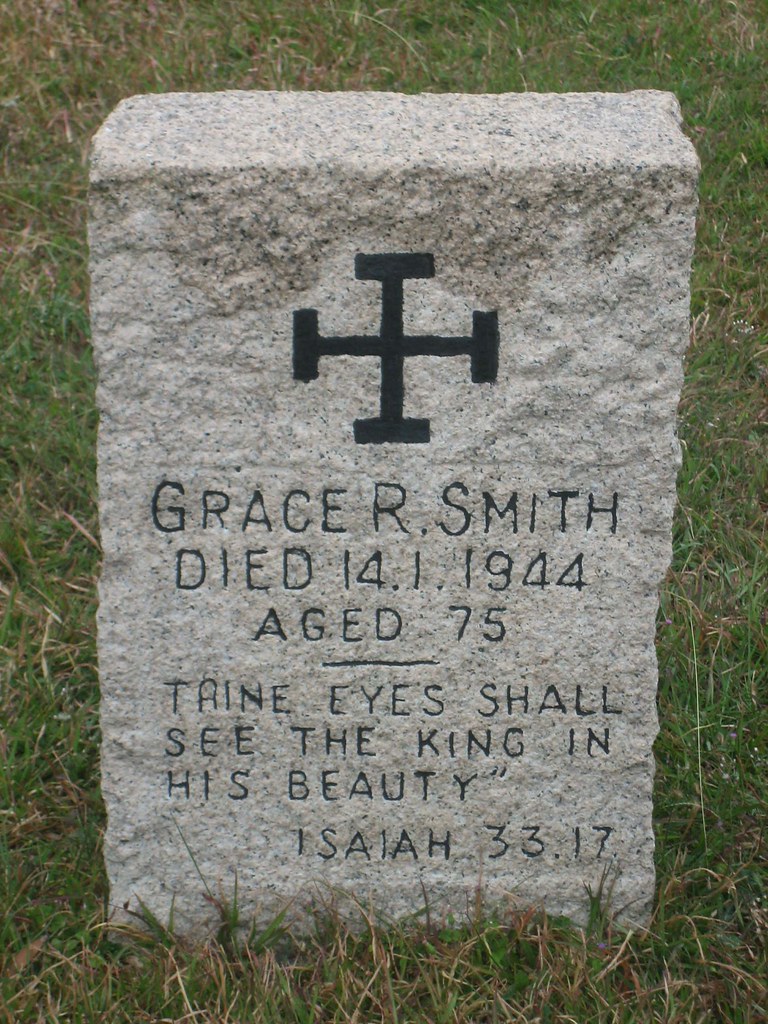 After the bombing of Pearl Harbor, the Japanese proceeded to take the Pacific. One of the first places to be attacked after Pearl Harbor (actually the next day) was Hong Kong. I won't go into all the details, because the plaque at the cemetery gave a pretty good rundown of the battle, so I took a picture of it for your convenience.
In my opinion, the main difference between Pearl Harbor and the Battle of Hong Kong is that Pearl Harbor was a surprise attack against a very well defended location, whereas the Battle of Hong Kong was an expected attack (since Japan had invaded the mainland some years earlier) against a very weakly defended community. In my opinion, there should have been an Allied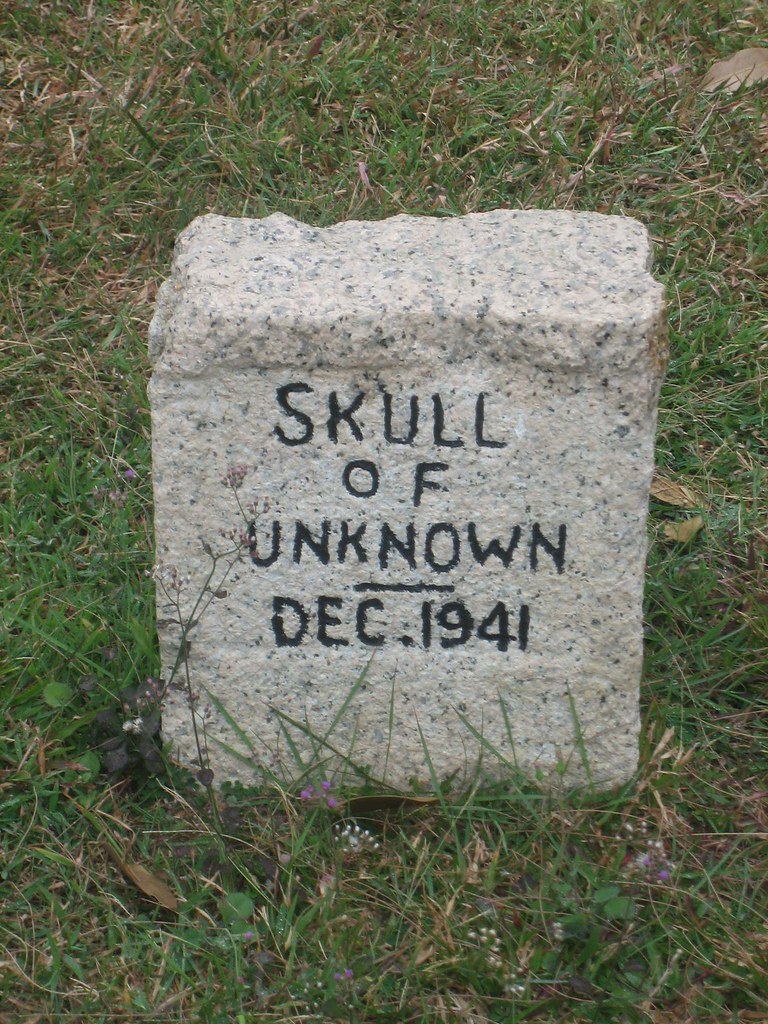 decision to give strategic assistance to Hong Kong, since the Allies had to know the Japanese were going to attack it sooner or later. Remember, they took Shanghai in 1937. So you could argue that Hong Kong had eight years warning.
The problem was Europe. The Americans were fighting a war on two fronts, and Europe was a much higher priority. But Hong Kong was not by any means the only place that had to take a back seat to Europe. The leader of the Philippines was quite bitter about Roosevelt's refusal to render adequate aid to prevent a Japanese takeover. Basically, Roosevelt's strategy was to pull MacArthur out (he had to trick him into leaving), let the Japanese take it temporarily, and then fight the Japanese off once the war in Europe had been one. It was a tragic betrayal--one that almost killed Uncle Otto, because he was involved in taking back the Philippines. But that was Roosevelt's decision. I don't know if Manuel Quezon (Philippine president at the time) ever forgave Roosevelt for that prioritization, because it meant terrible suffering for the Philippine people under Japanese occupation.
But if you ever have an extra day in Hong Kong, I would recommend that you go down to Stanley Village and hike out to the cemetery on the grounds of the old Stanley Internment Camp. Many of the gravestones were actually crafted by the prisoners in the camp, and those original tombs have been left as they were and preserved to this day. The area had been a cemetery much earlier in the life of the colony, but had been closed for 70 years by the time World War II started. So the cemetery also includes some much older tombstones from the middle of the 19th Century.
It as a rainy day, and I hadn't brought my umbrella. But fortunately, it was just a very light drizzle, so I was able to walk out to the old cemetery without getting too wet. I would have been disappointed by the weather, but I guess I felt that the cloudy day was strangely appropriate for visiting a cemetery. It is a very pretty area, with an excellent view of the bay, and was, in fact, used as a meeting place and park for internees at the camp throughout the years that they were interned by the Japanese.
After leaving the cemetery, I headed back toward Stanley, taking the path down to the beach to Main Street. Fortunately, since I had decided to go to the cemetery first, I ended up coming into Stanley from the "wrong" direction, so I found a little place for lunch beyond the main part of the town (if you were coming from the other direction) where they prices were a lot cheaper. Not quite Beijing prices, but pretty close, actually. The main part of Stanley, though is basically a tourist trap with lots of pricey bars. Not my kind of place. Pretty, I admit, but really tiring.
After the bombing of Pearl Harbor, the Japanese proceeded to take the Pacific. One of the first places to be attacked after Pearl Harbor (actually the next day) was Hong Kong. I won't go into all the details, because the plaque at the cemetery gave a pretty good rundown of the battle, so I took a picture of it for your convenience.
In my opinion, the main difference between Pearl Harbor and the Battle of Hong Kong is that Pearl Harbor was a surprise attack against a very well defended location, whereas the Battle of Hong Kong was an expected attack (since Japan had invaded the mainland some years earlier) against a very weakly defended community. In my opinion, there should have been an Allied
decision to give strategic assistance to Hong Kong, since the Allies had to know the Japanese were going to attack it sooner or later. Remember, they took Shanghai in 1937. So you could argue that Hong Kong had eight years warning. The problem was Europe. The Americans were fighting a war on two fronts, and Europe was a much higher priority. But Hong Kong was not by any means the only place that had to take a back seat to Europe. The leader of the Philippines was quite bitter about Roosevelt's refusal to render adequate aid to prevent a Japanese takeover. Basically, Roosevelt's strategy was to pull MacArthur out (he had to trick him into leaving), let the Japanese take it temporarily, and
then fight the Japanese off once the war in Europe had been one. It was a tragic betrayal--one that almost killed Uncle Otto, because he was involved in taking back the Philippines. But that was Roosevelt's decision. I don't know if Manuel Quezon (Philippine president at the time) ever forgave Roosevelt for that prioritization, because it meant terrible suffering for the Philippine people under Japanese occupation. But if you ever have an extra day in Hong Kong, I would recommend that you go down to Stanley Village and hike out to the cemetery on the grounds of the old Stanley Internment Camp. Many of the gravestones were actually crafted by the prisoners in the camp, and those
original tombs have been left as they were and preserved to this day. The area had been a cemetery much earlier in the life of the colony, but had been closed for 70 years by the time World War II started. So the cemetery also includes some much older tombstones from the middle of the 19th Century. It as a rainy day, and I hadn't brought my umbrella. But fortunately, it was just a very light drizzle, so I was able to walk out to the old cemetery without getting too wet. I would have been disappointed by the weather, but I guess I felt that the cloudy day was strangely appropriate for visiting a cemetery. It is a very pretty area, with an excellent view of the
bay, and was, in fact, used as a meeting place and park for internees at the camp throughout the years that they were interned by the Japanese. After leaving the cemetery, I headed back toward Stanley, taking the path down to the beach to Main Street. Fortunately, since I had decided to go to the cemetery first, I ended up coming into Stanley from the "wrong" direction, so I found a little place for lunch beyond the main part of the town (if you were coming from the other direction) where they prices were a lot cheaper. Not quite Beijing prices, but pretty close, actually. The main part of Stanley, though is basically a tourist trap with lots of pricey bars. Not my kind of place. Pretty, I admit, but really tiring.
Labels: Hong Kong, Second Sino-Japanese War, World War II
Wednesday, November 03, 2010
Mt. Davis Youth Hostel
Mt. Davis Youth Hostel. Last time I came to Hong Kong, I stayed at the YWAM base at the invitation of a friend. But I don't know anyone there, so I was not surprised when they did not answer my inquiry (especially since I told them I was from Beijing). I wasn't worried, because Hong Kong does have a pretty good youth hostel network, and I had been in touch with the Mt. Davis youth hostel a few times before, since I had considered staying there on my first trip a couple years ago.
The Mt. Davis Youth Hostel is located in Sheung Wan, on the western end of the Island Line. It is convenient in one sense, because it is only one stop from Central. But it is inconvenient in another sense, because it is right near the top of Mt. Davis, so you would have to walk quite a ways to get there. Fortunately, they have a shuttle that picks up at the Shun Tak center right by the MTR station in Sheung Wan. The shuttle doesn't run all day, but it makes several trips in the morning, and several trips in the evening, so it is enough to get the job done.
 When I first got to the youth hostel yesterday evening, the place seemed deserted. I am sure this was partly because it was in the middle of the week, but also perhaps because the Hong Kong youth hostel network is slowly expanding, so many backpackers are opting for the youth hostels more removed from the center of the city. For me, though, this hostel is really a convenient place to stay, because it is more like home for me than most of the other places I have stayed. Since I moved out to the western hills of Beijing, I have become accustomed to climbing up to a little pavilion in the early morning for a time of meditation before I start the day. I had figured I would have to forgo that for a week or two while I was on the road, but I was pleasantly surprised to find that this youth hostel is situated near the top of the mountain, and it is just a ten minute hike to the peak, which is an old abandoned World War II fortress. It's not developed (fortunately). There is no tourist site up there. No one taking tickets. Just an old abandoned gun site. Sorta like the World War II bomb shelter in the back yard of our house in Sakata. But quite a bit bigger, of course. As an added benefit, even though my cell phone doesn't work in Hong Kong, I discovered this morning when I was sitting on the top of one of the old battlements having my devotions, that I could get my text messages. That's about the right balance for me. Text messages once a day, otherwise no phone calls.
The Mt. Davis Youth Hostel has a very well equipped kitchen area. It is on top of the mountain, so there are no restaurants nearby, but there are many near the Shun Tak Center where the shuttle picks up and drops off. Youth hostels in China do not always have good kitchen facilities, but they often have a small eatery of some kind where you can buy cheap meals. And some of them will let you eat with the staff for 5 kuai, so that works out good for me, because I'm not much of a cook. But in terms of the way traditional hosteling is supposed to work--where you buy groceries at a local market and do your own cooking--this place is pretty well equipped.
The Mt. Davis Youth Hostel is located in Sheung Wan, on the western end of the Island Line. It is convenient in one sense, because it is only one stop from Central. But it is inconvenient in another sense, because it is right near the top of Mt. Davis, so you would have to walk quite a ways to get there. Fortunately, they have a shuttle that picks up at the Shun Tak center right by the MTR station in Sheung Wan. The shuttle doesn't run all day, but it makes several trips in the morning, and several trips in the evening, so it is enough to get the job done.
When I first got to the youth hostel yesterday evening, the place seemed deserted. I am sure this was partly because it was in the middle of the week, but also perhaps because the Hong Kong youth hostel network is slowly expanding, so many backpackers are opting for the youth hostels more removed from the center of the city. For me, though, this hostel is really a convenient place to stay, because it is more like home for me than most of the other places I have stayed. Since I moved out to the western hills of Beijing, I have become accustomed to climbing up to a little pavilion in the early morning for a time of meditation before I start the day. I had figured I would have to forgo that for a week or two while I was on the road, but I was pleasantly surprised to find that this youth hostel is situated near the top of the mountain, and it is just a ten minute hike to the peak, which is an old abandoned World War II fortress. It's not developed (fortunately). There is no tourist site up there. No one taking tickets. Just an old abandoned gun site. Sorta like the World War II bomb shelter in the back yard of our house in Sakata. But quite a bit bigger, of course. As an added benefit, even though my cell phone doesn't work in Hong Kong, I discovered this morning when I was sitting on the top of one of the old battlements having my devotions, that I could get my text messages. That's about the right balance for me. Text messages once a day, otherwise no phone calls. The Mt. Davis Youth Hostel has a very well equipped kitchen area. It is on top of the mountain, so there are no restaurants nearby, but there are many near the Shun Tak Center where the shuttle picks up and drops off. Youth hostels in China do not always have good kitchen facilities, but they often have a small eatery of some kind where you can buy cheap meals. And some of them will let you eat with the staff for 5 kuai, so that works out good for me, because I'm not much of a cook. But in terms of the way traditional hosteling is supposed to work--where you buy groceries at a local market and do your own cooking--this place is pretty well equipped.
Monday, November 01, 2010
Hope Needs Rejoicing
Doing my homework. Just left Shanghai on the train to Hong Kong. I stopped by Amy's office, and she and Jenny walked to the train station with me. We found a little Japanese restaurant, and Harry, another guy from the company Jimmy and Amy have started joined us for dinner. They they walked with me to the train station, where we had to say goodbye, because I was taking an international train, so they could not go to the train with me without "leaving" the country.
 Yesterday I went to the Mu'en church near People's Square. In today's China, all public churches are part of the Three Self Patriotic Movement, but the old missionary churches all have their own history. The Mu'en Church happens to be an old Methodist Episcopal Church. The Methodist Episcopal Mission started work in China in the middle of the nineteenth century and spawned believers like Watchman Nee, and was involved in establishing schools and hospitals, including the Peking Union Medical College.
The Mu'en Church does not provide English translation, and the pastor was a fast talker, but I was intrigued by the Chinese version of the text he spoke from (Romans 12:12). In English, it says, "Rejoice in hope, be patient in tribulation, be constant in prayer." But the Chinese phrases it a little differently. Translated literally, it would be "In hope you need to rejoice, in tribulation you need to show restraint, and your prayer needs to be constant." So the emphasis is on what attitude is appropriate for which situation. It is the first one that I tended to focus on, because I tend to identify hope with nail biting. But that's not faith. God wants us to hope with an attitude of faith, which means rejoicing in the fulfilment of what we hope for. Here is how the Thayer's lexicon in e-sword defines the word:
Rejoicing
G5463
χαίρω>chairōr>Thayer Definition:
1) to rejoice, be glad
2) to rejoice exceedingly
3) to be well, thrive
4) in salutations, hail!
5) at the beginning of letters: to give one greeting, salute
Part of Speech: verb
This, then is the essential attitude for anyone who has dared to ask God for something, and patiently wait in hope for the answer.
Yesterday I went to the Mu'en church near People's Square. In today's China, all public churches are part of the Three Self Patriotic Movement, but the old missionary churches all have their own history. The Mu'en Church happens to be an old Methodist Episcopal Church. The Methodist Episcopal Mission started work in China in the middle of the nineteenth century and spawned believers like Watchman Nee, and was involved in establishing schools and hospitals, including the Peking Union Medical College. The Mu'en Church does not provide English translation, and the pastor was a fast talker, but I was intrigued by the Chinese version of the text he spoke from (Romans 12:12). In English, it says, "Rejoice in hope, be patient in tribulation, be constant in prayer." But the Chinese phrases it a little differently. Translated literally, it would be "In hope you need to rejoice, in tribulation you need to show restraint, and your prayer needs to be constant." So the emphasis is on what attitude is appropriate for which situation. It is the first one that I tended to focus on, because I tend to identify hope with nail biting. But that's not faith. God wants us to hope with an attitude of faith, which means rejoicing in the fulfilment of what we hope for. Here is how the Thayer's lexicon in e-sword defines the word:
Rejoicing
G5463
χαίρω>chairōr>Thayer Definition:
1) to rejoice, be glad
2) to rejoice exceedingly
3) to be well, thrive
4) in salutations, hail!
5) at the beginning of letters: to give one greeting, salute
Part of Speech: verb
This, then is the essential attitude for anyone who has dared to ask God for something, and patiently wait in hope for the answer.
