Links
- CV
- Titles
- Topics
- Tickets
- Science
- About Eric
- Book Reviews
- Country Profile
- Modern China
- Contact Eric
- Podcast
- Vision
- Sekai
- John
Archives
RSS

Reflections on a Wandering Life.....
Thursday, November 04, 2010
The Battle of Hong Kong
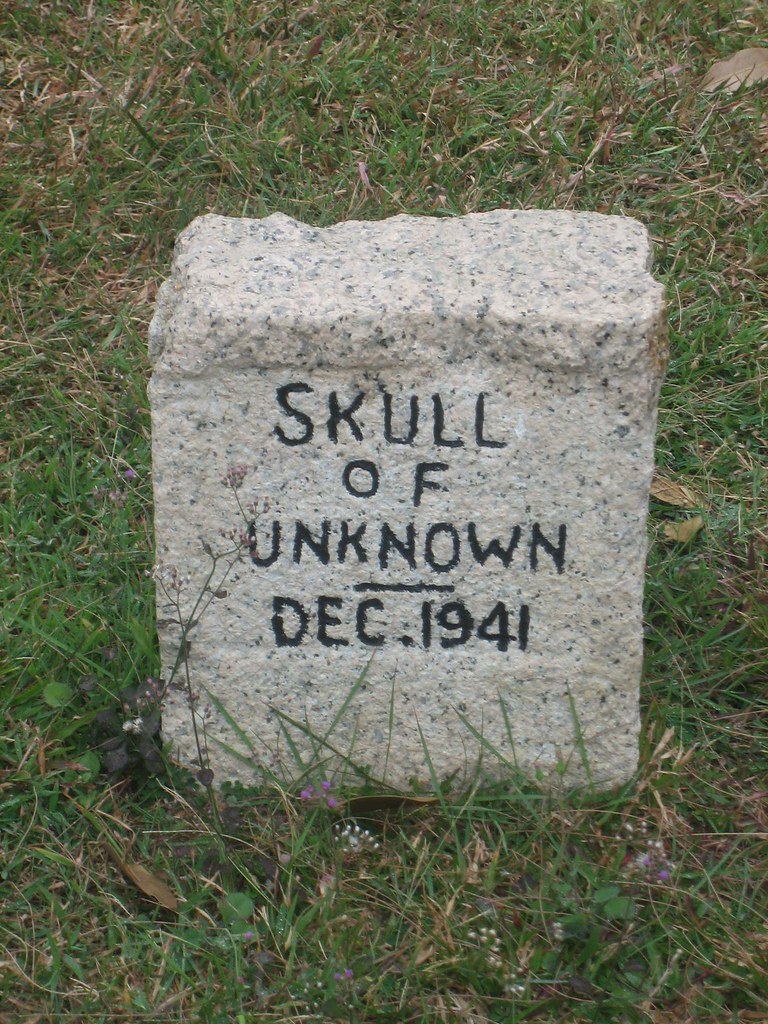
 After the bombing of Pearl Harbor, the Japanese proceeded to take the Pacific. One of the first places to be attacked after Pearl Harbor (actually the next day) was Hong Kong. I won't go into all the details, because the plaque at the cemetery gave a pretty good rundown of the battle, so I took a picture of it for your convenience.
In my opinion, the main difference between Pearl Harbor and the Battle of Hong Kong is that Pearl Harbor was a surprise attack against a very well defended location, whereas the Battle of Hong Kong was an expected attack (since Japan had invaded the mainland some years earlier) against a very weakly defended community. In my opinion, there should have been an Allied
 decision to give strategic assistance to Hong Kong, since the Allies had to know the Japanese were going to attack it sooner or later. Remember, they took Shanghai in 1937. So you could argue that Hong Kong had eight years warning.
 The problem was Europe. The Americans were fighting a war on two fronts, and Europe was a much higher priority. But Hong Kong was not by any means the only place that had to take a back seat to Europe. The leader of the Philippines was quite bitter about Roosevelt's refusal to render adequate aid to prevent a Japanese takeover. Basically, Roosevelt's strategy was to pull MacArthur out (he had to trick him into leaving), let the Japanese take it temporarily, and
 then fight the Japanese off once the war in Europe had been one. It was a tragic betrayal--one that almost killed Uncle Otto, because he was involved in taking back the Philippines. But that was Roosevelt's decision. I don't know if Manuel Quezon (Philippine president at the time) ever forgave Roosevelt for that prioritization, because it meant terrible suffering for the Philippine people under Japanese occupation.
 But if you ever have an extra day in Hong Kong, I would recommend that you go down to Stanley Village and hike out to the cemetery on the grounds of the old Stanley Internment Camp. Many of the gravestones were actually crafted by the prisoners in the camp, and those
 original tombs have been left as they were and preserved to this day. The area had been a cemetery much earlier in the life of the colony, but had been closed for 70 years by the time World War II started. So the cemetery also includes some much older tombstones from the middle of the 19th Century.
 It as a rainy day, and I hadn't brought my umbrella. But fortunately, it was just a very light drizzle, so I was able to walk out to the old cemetery without getting too wet. I would have been disappointed by the weather, but I guess I felt that the cloudy day was strangely appropriate for visiting a cemetery. It is a very pretty area, with an excellent view of the
 bay, and was, in fact, used as a meeting place and park for internees at the camp throughout the years that they were interned by the Japanese.
 After leaving the cemetery, I headed back toward Stanley, taking the path down to the beach to Main Street. Fortunately, since I had decided to go to the cemetery first, I ended up coming into Stanley from the "wrong" direction, so I found a little place for lunch beyond the main part of the town (if you were coming from the other direction) where they prices were a lot cheaper. Not quite Beijing prices, but pretty close, actually. The main part of Stanley, though is basically a tourist trap with lots of pricey bars. Not my kind of place. Pretty, I admit, but really tiring.
Labels: Hong Kong, Second Sino-Japanese War, World War II
Sunday, January 30, 2011
St. Andrew's Church
 Fortunately, the original structure was not altered by the Japanese, so it was fairly easy to restore it to it's original use after the war. Under the "one country, two systems" policy, religion in Hong Kong is not governed by the Beijing government. There is no Religious Affairs Bureau in Hong Kong, and no Three Self Patriotic Movement. So churches in Hong Kong function pretty much the way they do in any western country. I have mixed feelings about this, actually. I'm sure it's nice for the church people of Hong Kong not to have the government breathing down their necks. But the house churches in China are also quite independent. And even the Three Self Church I go to has quite a bit of latitude to do what they want (provided it is done by Chinese nationals, as discussed previously in this blog). And since Christianity is not a status religion on China, there is a purity and singleness of purpose that I find lacking in many churches in the West.
 I am staying the Mt. Davis Youth Hostel again. That's where I stayed last November. It's convenient because of the free shuttle from the Shun Tak Center at the Shueng Wan MTR station. Otherwise, it would be a very inconvenient place to stay, because it's up on top of Mt. Davis. I suppose it's about a half hour to forty minute ride, but the shuttle driver drives like a mad man, so it only takes about 15 to 20 minutes. Really convenient. Pretty nice view of the bay from up here too.
Saturday, October 05, 2019
Titles
A Prayer for All My Students
A Trip to the Zoo
A World Split Apart
American Civil War
An Ounce of Prevention
Arranged Marriage
Atheism and Its Scientific Pretensions
Atlantic Fiasco, The
Back to Jerusalem
Battle of Hong Kong
Bear in the Tree, The
Beihai Sea
Blaming China
Blowin' in the Wind
Boxer Rebellion, The
Bride Kidnapping
Censorhip in China--The Good Kind and the Bad Kind
Chen Guangcheng, The Case of
Chen Guangcheng : Update
China Undercover : Xinjiang Revisited
China and the United Nations
China on the Far Side
China's Crisis of Faith
Church in China, The
Coming Trump Landslide?
Conclusion of the Matter (Buddhism, Islam, and Secularism
Conclusion of the Matter (Harbin Jews)
Cover-up?
COVID Screening in China
Darwin's Methods
Delayed Vision
Democracy
Did I speak too soon?
Early Rain Church
Eric's Resume
Fragrant Hills
Good Guys vs. Bad Guys
Hong Kong Explained
How Old is China?
In a war between China and Taiwan, who would win?
Interview with Bill Porter
Is Japan Dying?
Is Ukraine really the victim?
Islamic communities in China & Kazakhstan
Japan in the Sixties
Jessup Champions - 2019
Jilin Rime
John Bolton's Departure
Jordan Peterson on Political Correctness
Kai County Christianity
Kazakhs Being Detained in Xinjiang
Mathematical Challenges to Darwin's Theory of Evolution
Measure Your Life by Loss
Melissa's Remonstrance
Money and Power
Naptime Beijing Style
Orthodox Thinking in China
Peking Duck
Persecution in China
Point at a Deer and Call it a Horse
Purpose Driven Life
Red Line, The
Russians are Coming, The
Roots (The Place of My Birth)
Science Night - How does a Sailplane Work?
Science Night - How to Land the Space Shuttle
Science Night - Red River of Life
Science Night - Space Suits
Search for Meaning Among Chinese Young People, The
Seats of Power, The
Shanghai Ghetto, The
Shaolin Temple
Significance of Xi'an
Some people did something?
Super Bowl, Beijing Style
Sweater Factory
Taiwan: China's Next Target?
Taiwan's Dire Straits
That's China
Think of Me
Tiananmen: What happened, and why?
Treatment of Detainees
Trump's Trade Wars
US public prefers parochial view of world
Undercover in Xinjiang
Uyghur Detention Camps in Xinjiang
Wall of Speech
Watchman Nee, Witness Lee, and the Local Church
What Do Chinese People Believe?
What is a Glider?
What is Hong Kong?
What is generosity?
What is Racism?
Who am I?
Who killed Khashoggi?
Why a Woman Cannot Be Elected President
Wuhan Virology Lab - Guilty or Innocent?
Xinjiang re-education camps
Zen Baggage
Monday, November 11, 2019
Taiwan's Dire Straits
Beijing’s new 26 measures are part of a greater effort to force a “one country, two systems” model on #Taiwan. I want to be very clear: China’s attempts to influence our elections & push us to accept “one country, two systems” will never succeed. pic.twitter.com/V1NTZKhEMr
— 蔡英文 Tsai Ing-wen (@iingwen) November 5, 2019
The constant question is how China and Taiwan will work through the perpetual conflict caused by the 70 year old civil war. The KMT under Chiang Kai-Shek used to rule China, and was an ally of the United States during World War II.
 The Communists took over most of China, but were unable to defeat the KMT. The KMT fled to Taiwan, but also occupied other smaller islands, one group of which is very close to Xiamen (a coastal city in Fujian Province). Less than 10 kilometers, in fact. The Communists decided that, as a step toward taking Taiwan, they should first capture these islands. They failed, in a struggle that came to be known as the Battle of Guningtou.
Although the Americans were not directly involved in this fight, the Nationalists did have the benefit of a bunch of cast-off World War II tanks, which gave them a hugely unfair advantage against the PLA. One can only wonder if the Communists should have bypassed Kinmen and gone directly to the main island of Taiwan. At any rate, the attempt to take Taiwan was foiled, and the Chinese Civil War was destined go continue for another...who knows? It's already been 70 years and it is not over, although the two sides have managed to maintain a more or less peaceful ceasefire for most of those years, except for a period during the Cold War when they were shooting at each other, but neither was attempting to conquer the other.
So where to go from here? The video below outlines the basic situation such as it is. It should be noted that the rock star featured in this video is a Taiwan native (not a descendant of those who came over in 1949). That should be taken into consideration when listening to his comments. The Taiwan natives have no interest in "retaking the mainland," which was always, and is still supposed to be the objective of the KMT. But something interesting seems to be happening in Taiwan. In the current generation, there seems to be less divide between the two entities. Young people generally don't have a strong philosophy about "one China," or whatever. They just know that they don't want to be dominated by China.
China has tried many ways to bring the wandering province back into the fold. Recently, they put a female television anchor in front of the camera begging "wan wan" to come back home.
It didn't go over well. I feel sorry for the lady, because she's probably a nice person. But it just doesn't work to be doing threatening military maneuvers, threatening to invade, and then have a pretty lady begging "wan wan" to come back to Mommy. This is the worst possible time for China to be doing that, especially with what is happening in Hong Kong and Xinjiang. The young people of Taiwan do not want to come back to a "Mommy" who puts hundreds of thousands of innocent people in prison camps. I call them prison camps, because people are put there by force. That's prison. So I don't want to hear what they are doing in those camps. It is not relevant to the basic human rights issue (deprivation of liberty without due process). If you told me that they were living in mansions and beijing waited on by servants, I would still call it a violation of human rights, because they did not choose to be there and they are not free to leave. I don't want to belabor that point, because I have addressed it before in this blog. Just let me say that that issue is not going to go away, and will affect the way most people view the China-Taiwan relationship for years to come.
So what should China do? I have never been a fan of Mao, but I do think he was right about Taiwan. In his conversation with Kissinger he stated that Taiwan would come back eventually, but the time was not right for it. He said it would take a hundred years. But that was almost fifty years ago. Will it really take another fifty years? I don't think it has to. But it will not happen in the next ten years. Maybe not even twenty. Why not? Because whatever you say about Taiwan, it has been functioning as an independent entity for seventy years, and is not going to just give up its de facto independence and become another province in China. The only way forward that China can accept right now is "one country, two systems," and that is anathema to both the DPP and the KMT.
There seems to be a perception that China is upset with Tsai Yingwen because she opposes "one country, two systems," in contrast to the KMT. This is incorrect. The KMT also opposes "one country, two systems." Why? Because "one country, two systems" would mean Taiwan coming into China under the Communist party. That would be the same as surrender.
"One country, two systems" and "one China" are not the same at all. They are as different as night and day. The DPP opposes both of them. The KMT supports "one China," but opposes "one country, two systems" just as much as does the DPP. So there is a difference between the KMT and the DPP with respect to "one China," but no difference between them with respect to "one country, two systems." They both oppose that vehemently. But right now, "one country, two systems" is the only way forward that China can accept. This is the main roadblock to reconciliation.
Is there a way forward? Many say no. But I do not agree. Reconciliation is definitely a possibility. But it will require a way forward that is more creative than what either side has conceived of or been willing to accept. Before that way forward can be found, China has to be willing to give up "one China, two systems," because the people of Taiwan will never, never accept it, and China does not have the power to force them to accept it.
China likes to talk about the fact that most countries recognize the Beijing government diplomatically. But that recognition is not a recognition of China's right to take Taiwan by force. The practical truth is that most, if not all of the countries that recognize China diplomatically also have a (non-diplomatic) relationship with Taiwan as an independent entity, and support Taiwan's (de facto) independence. There can be no greater example than the United States, which publicly recognizes China diplomatically, but openly sells weapons to Taiwan to defend their independence. What greater sign of recognition (of Taiwan's de facto independence) can there be than selling them weapons to defend that independence? Come on. Actions speak louder than words. The Americans clearly recognize Taiwan's (de facto) independence, and are committed by law to helping them defend it.
But again, reconciliation is not out of the question. Not at all. I don't think it is the only option, but it is one of them. It is worth talking about, and should be talked about. And that conversation can begin as soon as China is ready to give up the "one China, two systems" idea. Taiwan is not Hong Kong.
Labels: Taiwan
Tuesday, June 04, 2019
Tiananmen: What happened, and why?

Zhao Ziyang prepares to speak to the students at Tiananmen Square on May 19th.
It is generally agreed that the event that started the protests that eventually led to the Tiananmen Massacre was the death of Hu Yaobang, who was known as a reformer.
But I believe that the main event that exacerbated the conflict was when the Communist Party decided not to apologize for the editorial which was published in the People's Daily by Li Peng without the knowledge of the Politburo:
Deng's discussion with Li Peng and others on April 25 was supposed to be an internal affair. However, Li Peng decided to disseminate the contents of Deng's remarks that very evening to Party cadres of all levels, and paraphrased their talk in the editorial that he had the People's Daily publish on April 26, publicly designating the student demonstrations as "premeditated and organized turmoil with anti- Party and anti-socialist motives." [from Prisoner of the State, by Zhao Ziyang]Deng was not happy that his remarks had been pubished without his consent. After all, his remarks were in response to the report that Li Peng had given him. Does this mean that Deng Xiaoping was deceived? Zhao Ziyang doesn't think so. According him, Deng leaned toward a hard-line approach. But expressing these thoughts in a private meeting is one thing. Publishing them really angered the students. Zhao Ziyang favored a softer approach, but he had been on a trip to North Korea, so he was not present to diffuse the situation, and by the time he got back, Deng's remarks had already been published.
This conflict between the hardliners, led by Li Peng, and the softer approach favored by Zhao Ziyang is, I believe, the central drama of the whole event. If Zhao Ziyang's peaceful, conciliatory approach had been tried, the tragedy of June 4th may have been prevented. I think it very likely would have been. Here's Zhao Ziyang again:
However, the crux of the issue was Deng Xiaoping himself. I hoped at the time that he could just relax things a bit, for example, by saying something like, "It seems that when Li Peng gave his report on April 25, we overreacted to the situation. It now appears that the student demonstrations are not such an overwhelming problem." With something like this to work with, I could turn the situation around without even putting any of the liability on Deng. [from Prisoner of the State, by Zhao Ziyang]So why wasn't something like that done? Was it that they realized they had been too harsh, but could not admit it for fear of losing face, or was it the case that Deng never wavered in his original harsh assessment of the students' motives?
But the reaction of the students was also misguided:
Having grown entirely disillusioned with the government dialogues, the students decided to use the occasion of Gorbachev's visit to stage large-scale street demonstrations and a hunger strike. They believed it was the best opportunity to exert pressure on the government, which would be compelled to show tolerance during the state visit. But the students were mistaken, for the more they pushed ahead, the more pretext Li Peng and his associates had to crack down on them using violent means. [from Prisoner of the State, by Zhao Ziyang]We all know what happened. Zhao Ziyang lost the power struggle and the Party decided to bring in the military. According to Zhao, this decision was made by Deng Xiaoping in a meeting on May 17th. What happened? Was Li Peng just more persuasive, or was it the case (as Zhao seems to think) that Deng himself tended to be a hardliner, so he didn't need much persuading? Whatever the case may be, Li Peng won the day and the tanks rolled in:
In the end, Deng Xiaoping made the final decision. He said, "The development of the situation has only confirmed that the judgment of the April 26 editorial was correct. The reason that the student demonstrations have not subsided is something within the party, and that is Zhao's May 4 speach at the ADB meeting. Since there is no way to back down now without the situation spiriling completely out of control, the decision is to move troops into Beijing to impose martial law. [from Prisoner of the State, by Zhao Ziyang]
Zhao Ziyang had given a speech on May 4th to the delegates of the Asian Development Bank. It was well received, but Deng seemed to believe that it was an attempt to out-stage him or something--showing a division in the party, which Deng probably felt was an encouragement to the students to keep protesting. Zhao Ziyang emphatically denies this, but I don't know. I don't have the text of the speech, so there is no way for me to assess it. I only have the report of Bao Tong, who wrote the speech.

On May 19th, Zhao Ziyang went to Tiananmen Square to warn the students. Li Peng initially tried to prevent Zhao Ziyang from going to the square, but when he saw that Zhao was determined to go, he decided to go with him. But according to Zhao, he got cold feet and fled, so the only person we recognize from this picture is Wen Jiabao, who eventually became the Premier under Hu Jintao.
Western media tends toward hyperbole when describing events in China. Bad China sells in the West. I am wary of this. So I don't like words like "massacre." But in this case, there's just no other word that fits. It really was a bloody massacre, with government troops gunning down unarmed civilians by the tens and hundreds:
Within days of the massacre, Zhao Ziyang was arrested. He remained under house arrest for the rest of his life. This was a great loss for China. Zhao Ziyang was a superb administrator. After the Cultural revolution, he was made Party Secretary of Sichuan Province. As with much of China, Sichuan had been devastated by the mismanagement of the Great Leap forward and the Cultural Revolution. There was massive starvation. Zhao Ziyang's market reforms revolutionized the countryside. The laobaixing in Sichuan used to have a saying: 要吃粮, 找紫阳 . It's a play on words in Mandarin, but it basically says, "If you want to have food to eat, go find Zhao Ziyang." Nobody went hungry after Zhao Ziyang took over.
Zhao Zihang died in January of 2005. I remember I was sitting in a coffee bar in Wudaokou reading the Asia Wall Street Journal. There were many tributes to Zhao Ziyang. Two pages of the newspaper were given to articles about his leadership, his gifts as an administrator, and his attempt to be kind to the students and find a peaceful solution to the Tiananmen crisis. After I left the coffee bar, I walked out into the street and bought a copy of the China Daily. There was just a brief article saying that he made "serious mistakes." I thought, "This is all??" The contrast between how he was portrayed in the Western media, and how he was portrayed in the governmet propaganda paper was striking.
Many years ago, I was a the English corner when someone brought up Tiananmen. One guy said, "The students lost."
I said, "Well, they lost the battle, but they won the war." The lost the battle, of course, because their demonstration was brutally suppressed. But they won the war, because China was forever changed. In a way, the same thing could be said about Zhao Ziyang. He lost the battle, because he spent the last sixteen years of his life under house arrest. But he won the war. During those sixteen years, he secretly recorded thirty hours of tapes giving his memoirs of the Tiananmen tragedy. The tapes were smuggled to Hong Kong and transcribed into a book (see three-minute video below). So we have an uncensored report of the inner struggle within the Party in the days that led up to the tragic events of June 4th:
When I think of the events of June 4th 1989, I am reminded of the Vietnam-era song by the Beatles, "Give Peace a Chance." How might history have been different if the Party had listened to Zhao Ziyang instead of Li Peng and decided to "give peace a chance?" I dare to believe that many lives could have been saved.
So what should be our assessment of the Tiananmen massacre? To borrow a page from Dickens, it was the best of times and it was the worst of times. It was the worst of times, because many people died. But it was the best of times, because it brought out the extraordinary humanity of the Chinese people and their attempts to help the students. The many rickshaw drivers who went into action to bring the wounded to safety. The precious medical personnel who worked their hearts out to save as many lives as they could. Then there was the bus driver who used his bus to block truckloads of troops trying to enter the city. An army officer put a gun to his head and ordered him to move the bus. The bus driver reached in and pulled the key from the ignition and threw it as far as he could.
George Santayana said, "Those who cannot remember the past are condemned to repeat it." We cannot change what happened. It is not for us to change history. It is for us to remember it, and tell it to our children, so that it is not repeated. And in that effort, we are greatly assisted by Zhao Ziyang's little book, which will live in history as the final word on why Tiananmen happened.
Labels: Tiananmen
Tuesday, April 30, 2019
Censorhip in China--The Good Kind and the Bad Kind
I should make clear that I do not believe censorship is inherently immoral. Some people do, but I don't. Everybody censors something at some time. You censor what you let others see of your own diary. You censor what you allow children to see. We may find censorship distasteful, and we will often argue about what should or should not be censored, but no one can say that all censorship is bad all the time.
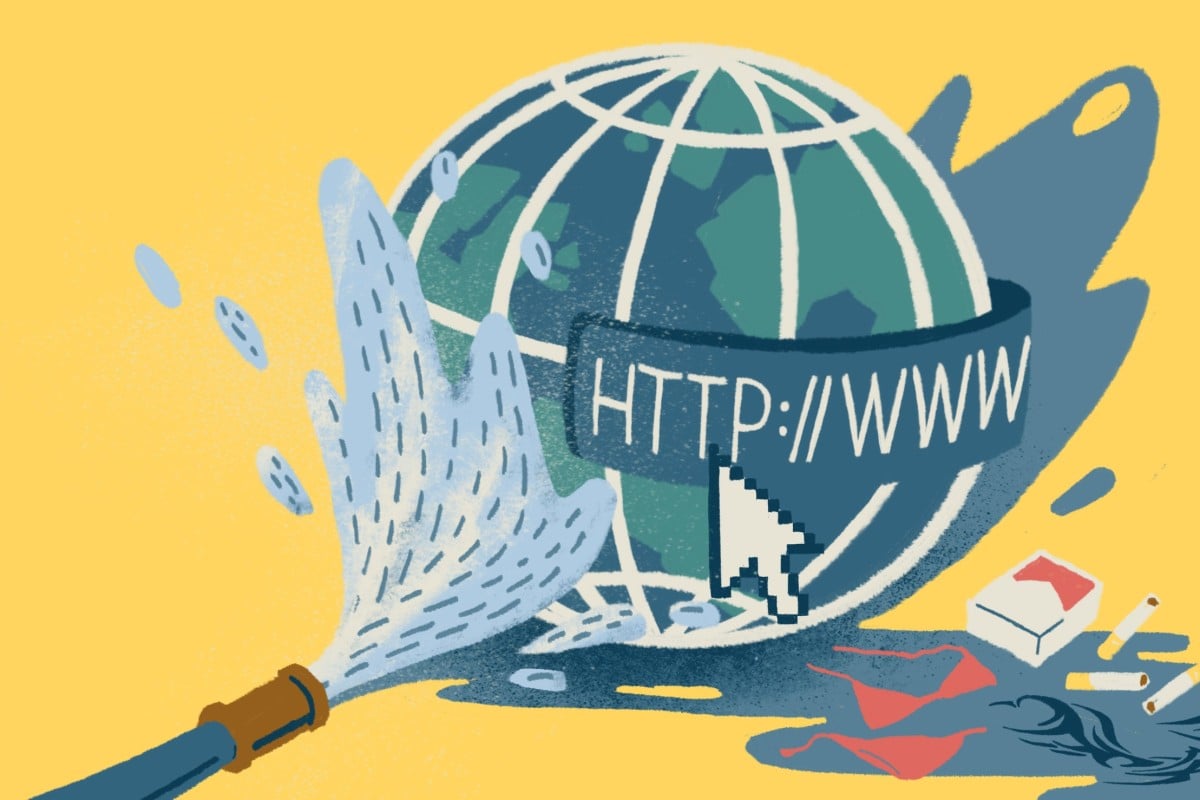
But dishonesty is despicable, and the dishonesty in the Chinese media has always bothered me much more than the censorship. I don't think the censor featured in this SCMP article is a bad guy. I think he's a good guy. You may not agree with what he (or his company) considers offensive material, but I think you will agree that he is not a bad guy. He's just an honorable man doing his job.
Click for article.
This piece seems to show what I call the "good" side of censorship, which is removal of offensive content (though there can certainly be debate about what should be considered offensive). Maybe I am a bit cynical, but I think the reason this entity within China was so open to giving outsiders an inside view is because it takes attention away from the dark side of censorship, which is excessive control of individual expression.
The watershed moment for the dark side of censorship in the Chinese media was the extraordinary event in January of 2013, when the propaganda guy from the Southern Weekly edited a New Year's message, but left the bylines alone, implying that the writers of the original piece had written the new, sanitized version. The anger which ensued from this event resulted in a strike--very unusual in China--where the paper was actually shut down.

I refer to that event as a watershed moment, because it showed that the powers that be are not only committed to "good" censorship, but that they defend their right to control information and even falsify information for the purpose of influencing the thinking of the people.
Begin your study of that incident with the Freedom House article. Then if you want more detail, the Wikipedia article is also good. As you study those two articles, what emerges is not just the dishonesty, but the excessive micro-management of the message. And how ironic that what they had intended to keep secret has been shouted from the housetops.
But there is good news, too. Another thing that comes out as you study that incident, is that there are many decent journalists in the Chinese media who really do want to do a professional job of bringing the truth to light. They are not just kissing up to the powers that be. I remember at the time the head of the Beijing News famously refused to publish the government ordered propaganda statement following the incident. Sina Weibo published it, but with a statement that it was published under duress. These are only a couple examples. The response of conscientious journalists in China to this incident is a heartwarming story that needs to be told. There should be a movie. So I am actually more optimistic about journalism in China than in America.
When I first came to China fifteen years ago, I often wondered where Chinese "journalists" got their education, because there was so much editorializing in news articles. The Southern Weekly incident taught me that part of the reason for my jaded view was because I only read the English language propaganda papers, not the real journalistic enterprises such as Southern Weekly, or Beijing News, which do not have English language versions. And never did I imagine that I would one day see American media outlets becoming worse than what I see in China. American "journalism" has really gone downhill in terms of basic journalistic integrity. I think there's actually more propaganda in the American media now than in the Chinese media. Not government propaganda, but propaganda nonetheless.
The Southern Weekly incident is really the "Tiananmen Square" of journalism in China. And I say the same thing about the courageous journalists from the Southern Weekly as I say about the young people at Tiananmen in 1989: They lost the battle, but won the war. Stay tuned.
The Southern Weekly is a mainland paper that "pushed the envelope" in presenting news as openly as possible under the circumstances. There are basically two kinds of newspapers in China: the government propaganda papers (Global Times and China Daily), and independent papers such as Southern Weekly and the Beijing News. The government propaganda papers contain lots of scripted propaganda. The independent papers are not generally controlled by Beijing, but they are regulated, which means their content is not actually written by Beijing, but can be censored by Beijing. The Chinese name of the Southern Weekly translates literally to "Southern Weekend," but that sounds a little strange in English, so it is usually anglicized as "Southern Weekly."
Labels: Censorship, Chinese Media, Internet
Thursday, August 17, 2006
But Qingdao today has grown far beyond the original German outpost. So when you roll into Qingdao, you don't see Germany, you see China. Once you get here, though, you can see the remnants of the old German colony all over the place. And it is seen in more than just architecture. The old world Deutschland sophistication seems to permeate, or at least influence every aspect of Qingdao society. Perhaps part of it is because Germany is viewed very positively in China today. China tends to contrast Germany with Japan it its attitude toward past atrocities. And positive relationship with Germany is seen as advantageous economically. I haven't actually met a lot of Chinese people who study German, although I have met a few, and perhaps more than any other European language except French, which is the default "second foreign language" for English majors.
Actually, I have only been here two days, so perhaps I should not be too quick to analyze what makes Qingdao so unique. I guess I don't know entirely what it is, really. Qingdao is more like America then any city I have been to in China. I don't think I would like to live here; Qingdao is not a very good place for bicycles. Not that you would have to have a car, because taxis are pretty cheap here, and the bus system is great. But if you lived here long enough, I just think you probably would get a car, because the modern city of Qingdao is quite spread out, and the streets are wide, clean, and very drivable. Remember, Qingdao does not have the same dynastic history as other Chinese cities. It's roots are colonial, and that fact is very noticeable when moving about this city.
Yesterday, I went to the museum at the Tsingtao (old spelling) brewery. Most people, even in Germany do not know (or certainly would not want to admit) that the most widely consumed German beer in the world is made in China. The Tsingtao brewery was built by the Germans in 1903, just a few years after the colony was established, so the history of the brewery parallels the history of the community. This cost is a bit expensive, I think (50 RMB), but it is worth it, because the museum is pretty well put together, and the historical section is generally pretty good, although there is no mention of the Cultural Revolution. I mean, you really have to read between the lines to see anything substantial regarding that tumultuous period.
Today, I visited the Protestant Church, which dates back to just after the Tsingtao brewery was built. In its time, it was probably a Lutheran church, but I'm just guessing. There isn't that much about the history of the building when you go there. It is not a museum, it's a church. The people there don't seem to know anything about the history. But they do take very good care the building, which is in amazingly good condition. I mean, everything works. The clock on the steeple tower is in mint condition, and still ticking. When you walk around in this building, or sit in the sanctuary, there's nothing to tell you that it's not 1910. Well, maybe the electric clock on the wall would give it away. But it's not a digital clock, and perhaps pretty old itself. Anyway, it is really worth seeing.
The building that really is a museum is the old governor's mansion. It is absolutely fabulous. The German governor who built it in 1903 was fired when Kaiser Wilhelm found out how much he had spent on the project. Much of the history narration (they give you a little hand held machine for 20 RMB) concerns famous Communists who have stayed in the building, but there is a little about the German part of its history too.
I also went to the old underground German fort on Qingdao Hill. That is really something to see. It is certainly nothing fancy. It is a cold, forbidding basement. But the size of the thing is impressive--perhaps you could see it as a giant bomb shelter. It didn't help the Germans keep the town, though, because they were overwhelmed when the Japanese attacked in August of 1914.
Anyway, that's the summation of a very brief tour. It's been a relaxing couple of days. Tomorrow I go home. Perhaps next time, I will visit the Catholic Church. It's not really from the colonial period, because it was built in the thirties, but it does have an interesting history. Can't recommend it, because I haven't seen it, but, as I said, I probably will some day. As far as the other places, here's my summation:
Qingdao Brewery. I think it's a good starting point, because it has a better history narration than anything else in town. There is a lot more about the Japanese than the Germans, but that's OK, because, after all, they were involved longer, after everything was said and done.
Protestant Church. I guess the only thing I would say here is that it might be nice to come on Sunday. The other thing would be to see if they would let you climb the ladder up to the belfry. You can go up to the steeple, but not the belfry. But it is an impressive building. See it.
Governor's Mansion. Pay the 20 RMB for the little hand-held machine that will give you the narration in English. You will have to supplement that with some study on the Internet or something.
German Underground Fortress. If you're not really a history buff, perhaps you can skip this one. There is nothing of beautiful architecture here. Still, it is only ten kuai, and it is unique enough to be worth seeing. Remember, the battle with the Japanese was the only World War I battle that took place in Asia.
Sidewalk Hotel. Yes. Definitely. Recommend it highly. Just look for the most run-down neighborhood you can find behind the train station on the other side of the tracks.


